
Think of a historical silver chart as a roadmap. It tracks the metal's value over time, showing you its entire journey through economic peaks and valleys.
For anyone new to precious metals, this visual tool is the single best way to get a feel for when silver has been a bargain and when it’s been highly valuable. Getting a handle on this history is the very first step toward making a smart selling decision. For Gold and Jewelry Buying, understanding these charts can lead to the highest payout in Boise.
Your Quick Guide to Reading Silver Price Charts
Imagine a silver price chart as a mountain range you're looking at from the side. The horizontal line at the bottom is time—days, months, or even decades. The vertical line running up the side shows the price per ounce.
The jagged line making its way across the chart? That's the silver price itself. The high peaks are moments when silver's value soared, flagging what were likely excellent times to sell. The low valleys show the periods when prices dipped.
This visual story is incredibly powerful. Instead of just hearing that prices are "up," you can see exactly how much they've risen compared to last month, last year, or even the last ten years. This context is what separates a good decision from a guess.
Why This Matters for Boise Sellers
For folks right here in Boise, especially anyone managing an estate or thinking about selling some long-held silver jewelry, this knowledge is invaluable. It helps you recognize a favorable market and feel confident when you finally decide it's time to sell.
A basic grasp of the historical chart for silver turns what can feel like an intimidating process into a straightforward one. It’s not about becoming a Wall Street expert; it’s about knowing enough to ask the right questions and recognize a great offer when you see it.
A price chart gives you perspective. Seeing where today's price stands in the context of the last five or ten years can instantly tell you if you're in a strong selling position.
Turning Charts into Cash
Understanding these trends helps you time your sale for the best result. For instance, if you see the chart is climbing toward a multi-year peak, that’s a clear signal that now could be an excellent time to get the highest payout in Boise for your items.
This is where a trusted local buyer for Gold and Jewelry Buying comes in. Forget the hassle and uncertainty of shipping your valuables off to some faceless online company. You can save the hassle and sell locally for more than online shipments.
We provide a transparent, no-pressure experience right here in Boise, including:
- Free Xray Scanning and Gold Testing: We use safe, non-destructive technology for precise Gold and Silver Testing.
- Hassle-Free Offers: Our quotes are straightforward, with absolutely no obligation.
- Price Matching: We're committed to giving you the best possible price for your valuables.
By learning to read the simple story a silver chart tells, you’re equipping yourself to turn old jewelry, coins, or flatware into a significant payout. To learn more about how daily prices are set, check out our guide on the spot price for gold and silver.
Decoding the Key Elements of a Silver Chart
While the basic shape of a historical chart for silver tells a story at a glance, zooming in on its components gives you a much richer understanding. Think of it like learning to read the dashboard of a car—at first, it’s just a collection of dials, but soon each one provides critical information for your journey. Understanding these elements is what empowers you to look at silver's past performance with real confidence.
This map breaks down the core concepts you'll encounter when looking at a silver chart, focusing on the relationship between time, price, and the resulting trend.
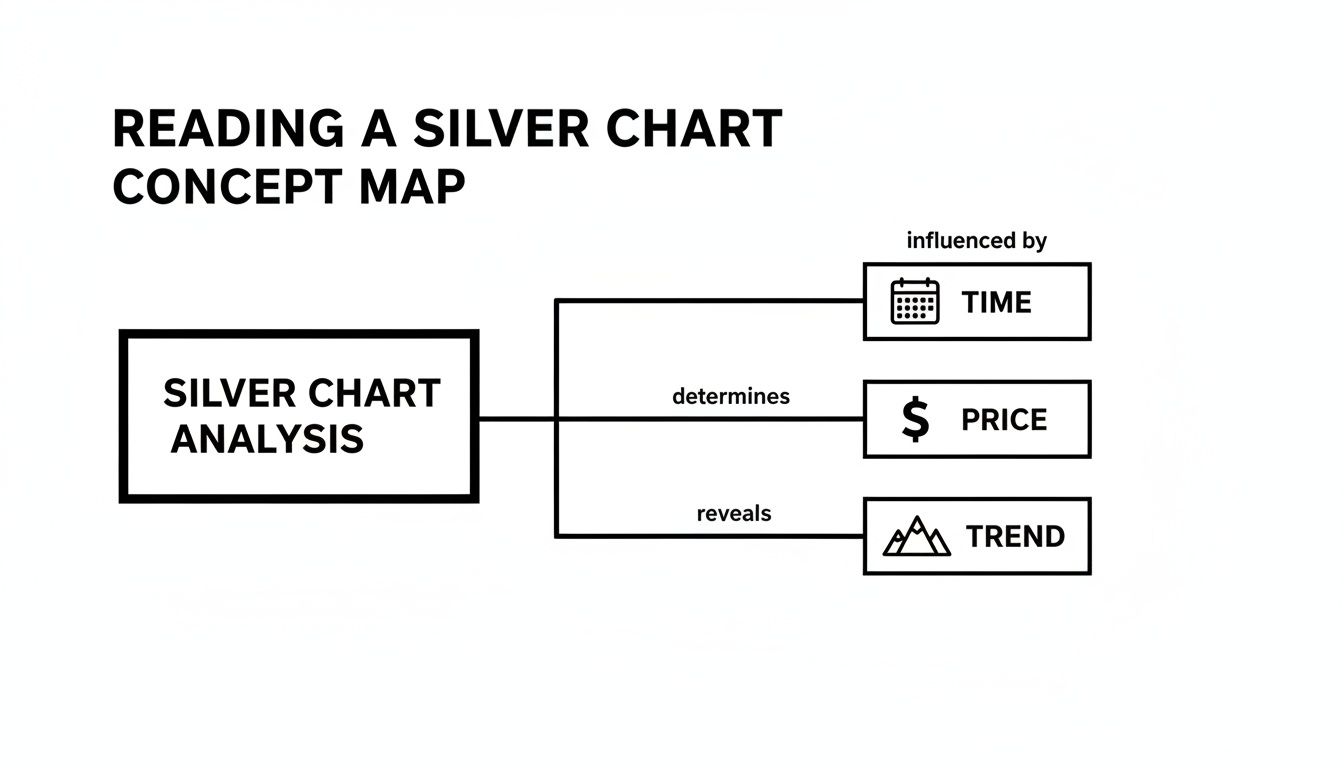
As you can see, the interplay between these three factors creates the peaks and valleys that can signal great selling opportunities. Let's break down these and a few other key features.
Timeframes Tell Different Stories
The first thing you'll notice on any silver chart is the option to change the timeframe. Each view offers a unique perspective on silver's performance, kind of like using different lenses on a camera to get a wide shot versus a close-up.
- Daily Chart: This shows price movements within a single day. It’s useful for seeing short-term volatility but can be too "noisy" to be helpful for long-term planning.
- Weekly Chart: This view smooths out the daily ups and downs, revealing the dominant trend over several months. It's a great way to get a feel for the market's current direction.
- Monthly or Yearly Chart: This is the big-picture view. It shows major peaks and valleys over many years, which is exactly what you need to identify historically high prices and make a strategic selling decision.
For someone looking to sell an estate collection or silver coins, the monthly and yearly charts are by far the most valuable tools for spotting a strong market.
Linear vs. Logarithmic: A Simple Choice
You'll often see charts displayed on either a linear or logarithmic (log) scale. A linear scale shows price changes in equal dollar amounts, while a log scale shows them in equal percentage changes.
Here’s a simple way to think about it: A linear chart is like counting your steps as you climb a hill, where each step covers the same distance. A log chart, on the other hand, measures your progress by how much higher you are as a percentage of your starting point. When you're looking at decades of data, the log scale is often better because it keeps early, smaller price moves from looking flat compared to later, larger ones.
Understanding Key Indicators
Beyond just the price line itself, charts often include helpful indicators that act as signposts for market momentum. Two of the most common and useful are moving averages.
A moving average is simply the average price of silver over a specific period, like 50 days or 200 days. These lines smooth out the day-to-day price spikes and dips, making it much easier to see the underlying trend. When a short-term average (like the 50-day) crosses above a long-term average (the 200-day), it often signals that momentum is building.
Trading volume is another critical piece of the puzzle. It shows how many ounces of silver were traded during a specific period. A rising price accompanied by high volume suggests strong conviction behind the move, making the trend feel more reliable.
Finally, remember that the price you see on a chart is the "spot price" for one troy ounce of pure silver. If you’re curious about how that standard unit of measurement works, we have a clear explanation in our guide about the troy ounce.
When you're ready to sell physical items like sterling silver jewelry, a local expert in Gold and Jewelry Buying will give you the highest payout in Boise based on this spot price, your item's specific purity, and its weight. With our free X-ray scanning and gold testing, you get a precise and fair assessment every time. We offer hassle-free offers and price matching, so you can save the hassle and sell locally for more than online shipments.
Major Events That Shaped Silver's Price History
That squiggly line on a historical chart for silver isn't moving at random. Think of it as a story written by global events, economic drama, and human ambition. Silver's value is deeply connected to the world around it, acting as a mirror that reflects times of crisis, innovation, and intense speculation.
When you understand the stories behind the biggest price swings, you gain the context needed to make much smarter selling decisions. Silver's journey has been punctuated by moments of extreme volatility, and by looking at these key episodes, you can truly appreciate its dual role as both an essential industrial metal and a trusted safe-haven asset. This historical know-how helps you recognize patterns and feel more confident when you're looking for the highest payout in Boise for your silver items.
To better illustrate how world events translate into price movements, the table below highlights some key periods in silver's history.
Key Historical Periods and Their Impact on Silver Prices
This table showcases significant historical events and their corresponding effect on the silver market, showing the cause-and-effect relationship between global events and price fluctuations.
| Historical Period / Event | Approximate Timeframe | Impact on Silver Price | Key Driving Factors |
|---|---|---|---|
| Hunt Brothers Corner | 1979-1980 | Massive, rapid price spike followed by a sharp crash. | Aggressive market speculation and an attempt to corner the silver supply. |
| 2008 Financial Crisis | 2008-2011 | Sustained bull run, pushing prices to near all-time highs. | Flight to safety, concerns over inflation, and central bank monetary stimulus. |
| Industrial Revolution 2.0 | 2010s-Present | Strong, steady demand providing a high price floor. | Increased use in solar panels, electronics, EVs, and medical applications. |
| COVID-19 Pandemic | 2020-2021 | Initial dip followed by a strong recovery and rally. | Economic uncertainty, government stimulus, and renewed safe-haven buying. |
As you can see, silver prices don't exist in a vacuum. They are a direct response to fear, opportunity, and innovation on a global scale.
The Infamous Hunt Brothers Corner
One of the most dramatic chapters in silver’s modern history unfolded in the late 1970s. This period saw one of its most legendary price surges, driven by the aggressive—and audacious—actions of the Hunt brothers. They began accumulating enormous quantities of silver in a bold attempt to corner the market.
By January 1980, their efforts had worked, propelling silver to an astonishing all-time high of $49.45 per ounce. It was a speculative frenzy that created a massive price bubble. But, as with all bubbles, it was destined to pop. Regulatory changes and margin calls ultimately forced the Hunts to sell, causing the price to crash spectacularly on what became known as "Silver Thursday." It’s a powerful lesson in how pure market sentiment can drive prices to unsustainable heights before a painful correction. For a closer look at the data, you can explore the commodity data on TradingEconomics.com.
The 2008 Financial Crisis And Its Aftermath
Fast-forward to the 21st century, and another major event sent shockwaves through the silver market: the 2008 global financial crisis. As central banks fired up the printing presses with unprecedented monetary stimulus to rescue the economy, investors grew deeply concerned about currency debasement and runaway inflation.
This widespread uncertainty drove a massive flight to safety. Worried investors sought out tangible assets to protect their wealth, and silver, right alongside gold, became a primary destination. This safe-haven demand, combined with a recovering industrial appetite, sent silver soaring from lows near $9 to a peak of over $48 per ounce by 2011. This sustained bull market cemented silver's reputation as a reliable store of value during times of deep economic turmoil.
Understanding these historical price spikes is key. When you see similar economic conditions emerging—like high inflation or widespread uncertainty—it often signals a strong selling opportunity for your silver jewelry and coins.
For those interested in a deeper dive, our article on historical silver prices over the last 100 years provides even more context on these major market cycles.
Modern Drivers: Industrial Demand and Economic Shifts
In more recent years, silver's story has been shaped just as much by industrial innovation as it has by investment demand. Silver is a critical, often irreplaceable, component in many of today's fastest-growing technologies, which creates a strong and consistent source of demand.
Here are just a few of the key industrial uses that are driving silver's value today:
- Solar Panels: Silver's unmatched conductivity makes it absolutely essential for photovoltaic cells. The global push toward green energy is a massive long-term driver for silver demand.
- Electronics: From the smartphone in your pocket to the advanced systems in electric vehicles, silver is a necessary element in modern tech.
- Medical Applications: Its natural antimicrobial properties make it incredibly valuable in medical devices, wound dressings, and other treatments.
This constant industrial consumption provides a fundamental price floor for silver. It means that even when investment demand cools off, there is a steady, underlying need for the metal that helps support its value.
When you bring your items to a trusted local expert specializing in Gold and Jewelry Buying, we see this full picture. We provide free Xray scanning and Gold Testing to accurately assess your items' true value, offering hassle-free offers with a price matching guarantee. You can save the hassle and sell locally for more than online shipments, securing an immediate and fair payout based on a current market that's shaped by these powerful historical forces.
Using Charts for Smart Selling Decisions in Boise
Knowing how to read a historical chart for silver is one thing, but turning that insight into actual cash in your pocket is the real goal. If you're a Boise resident with silver to sell—whether it’s bullion, old coins, or sterling silver jewelry—that chart is your single best tool for timing your sale. It helps you get the best possible price by turning you from a passive seller into a confident, informed one.
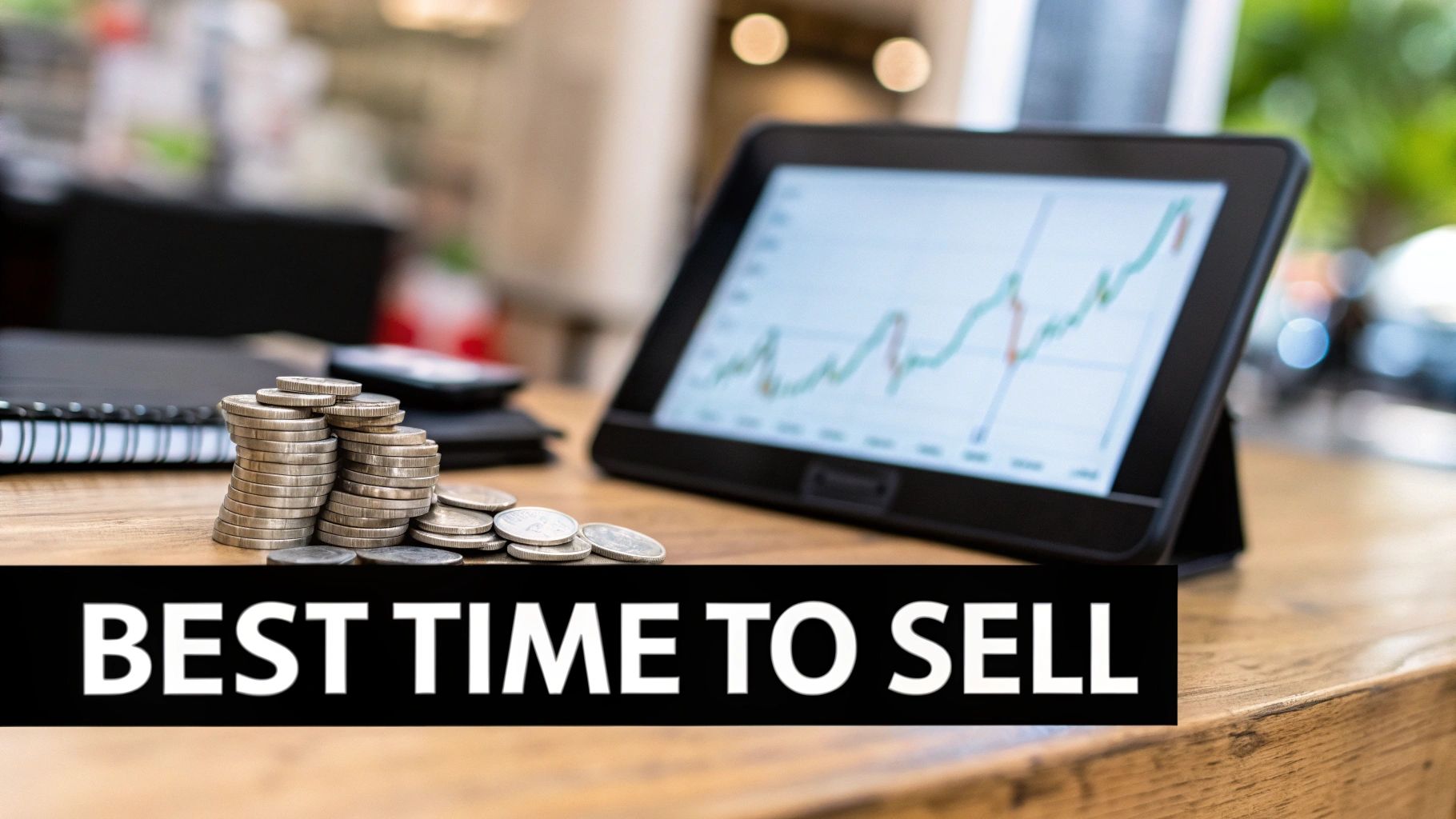
The practical application here is simple: you want to sell into strength. When you pull up a one-year or five-year chart and see the price pushing toward the top of that range, that’s a powerful signal that the market is on your side. You don't have to nail the absolute peak—nobody can—but selling into a strong, upward trend is the key to maximizing your return.
Spotting Your Selling Window
Trying to time the market perfectly is a fool's errand. Identifying a favorable selling window, however, is entirely possible. Think of it like selling a house; you want to list when the market is hot, not when it's cooled off. A historical chart gives you that crucial market "temperature check" for silver.
Here are a few practical signals to watch for:
- Approaching a Multi-Year High: If the current price is challenging levels not seen in three, five, or even ten years, you’re looking at an exceptionally strong selling environment.
- Consistent Upward Trend: A steady climb over several months shows real momentum. This usually points to sustained buyer interest and a healthy market.
- Seasonal Strength: You might be surprised to learn that silver has shown seasonal patterns over the years. Data from the last few decades often points to strength in the first quarter of the year and again in the fall.
When you bring your silver to a local buyer in Boise, the offer you receive is based on the spot price that day. Selling when the chart shows a high spot price directly translates to a higher payout for you.
Beyond the Spot Price: Premiums and Local Value
The price you see on the chart is the "spot price," which is the baseline value for raw, pure silver. But the actual cash you’ll receive is also influenced by something called a premium. A premium is the amount paid over the raw silver value for a specific item, like a rare coin or a sought-after silver bar.
This is where a trusted local buyer makes all the difference. While those online mail-in services might seem convenient, they often come with hidden fees, the risk of your package getting lost, and long waits for payment. When you save the hassle and sell locally for more than online shipments, you gain some serious advantages right here in Boise.
A reputable local establishment that specializes in Gold and Jewelry Buying knows the local market inside and out and can offer the highest payout in Boise. We give you transparent, hassle-free offers on the spot, with absolutely no pressure to sell.
The Boise Advantage: Secure and Transparent Transactions
Selling valuable items shouldn't be a stressful experience. When you choose a local expert, you can watch the entire process, ask questions, and walk out with immediate payment. That's a level of peace of mind the online guys just can't match.
To make sure you get the best value, we offer a couple of key services completely free of charge:
- Free X-ray Scanning and Gold Testing: We use non-destructive, state-of-the-art technology to determine the exact purity of your silver and gold. This is far more accurate—and safer for your items—than old-school acid tests.
- Price Matching Guarantee: We're so confident in our offers that we will match any legitimate, local competitor's price. This guarantees you always get top dollar for your items.
By combining what you’ve learned from the historical chart for silver with the expertise of a trusted local partner, you create the perfect formula for a successful sale. You can feel confident you’re selling at the right time and for the right price. To see exactly how the process works, take a look at our complete guide on how to sell silver bullion. It’s all about empowering you to turn your assets into a significant payout, securely and efficiently.
A Practical Guide for Estate and Jewelry Sellers
Turning your silver into cash might seem complicated, but it's really just a matter of following a few simple, logical steps. Especially for those handling an estate or selling personal jewelry for the first time, this little roadmap takes the guesswork out of the equation. Knowing what to do, and when, empowers you to walk into a sale with confidence and walk out with the best possible payout for your valuables.
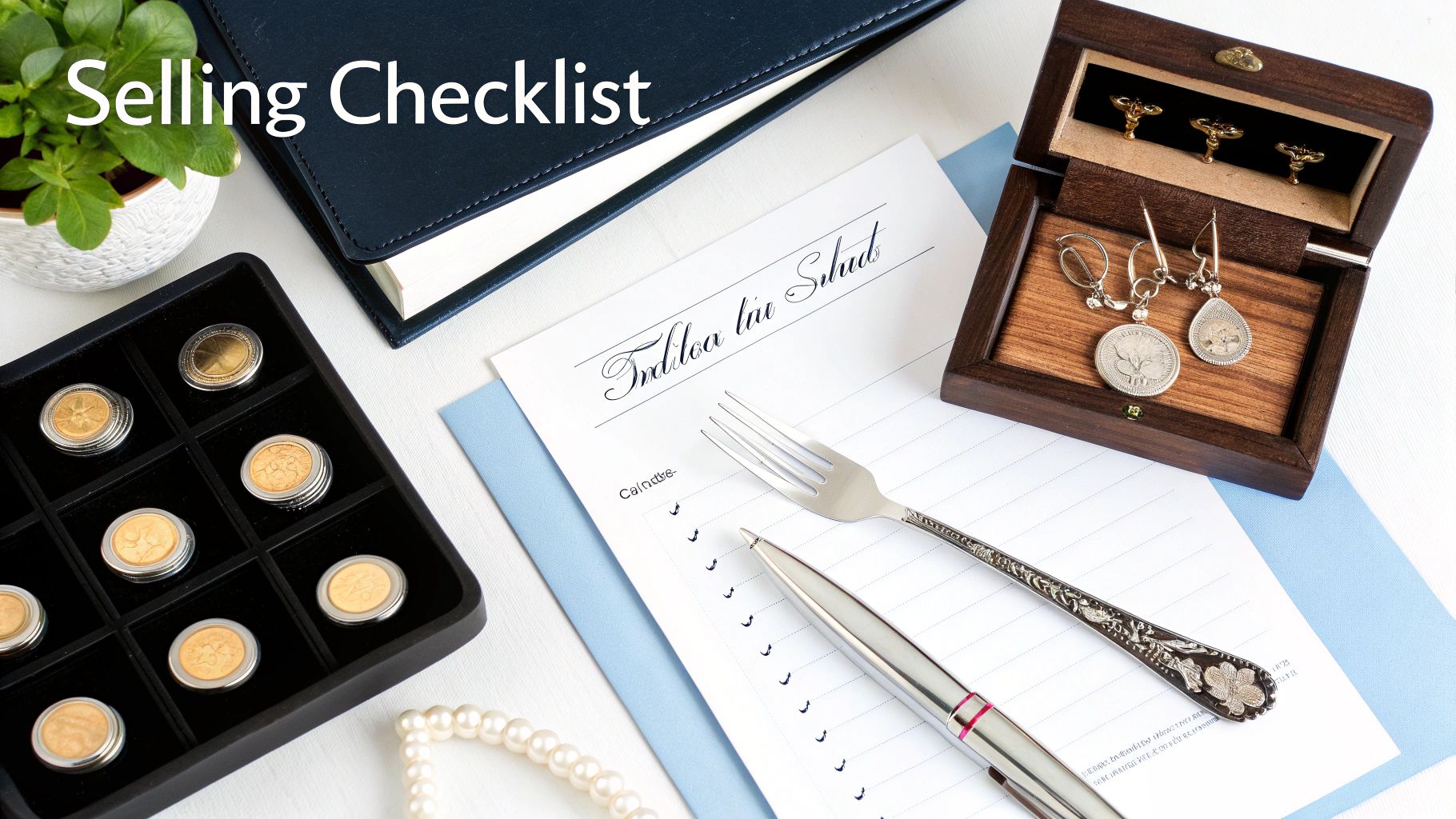
Follow these four steps, and you’ll navigate the selling process smoothly and securely, from sorting your items at home to getting paid right here in Boise.
Step 1: Gather and Sort Your Items
First thing’s first: you need to know what you've got. The initial step is simply to go through your collection and group similar items together. This isn't just about getting organized; it's about creating a clear inventory before you even think about getting an appraisal.
Most estate collections we see include a few common categories:
- Sterling Silver Flatware: Full sets of forks, spoons, and knives are a classic find in many estates.
- Silver Jewelry: This covers everything from rings and necklaces to bracelets and earrings, often stamped with "925" or "Sterling."
- Silver Coins and Bullion: American Silver Eagles, old silver dollars, and other collectible coins are also very common.
A quick tip: don't worry about polishing anything. A professional buyer will evaluate the pieces as they are, tarnish and all. Just getting everything into one place is a huge first step. If you're managing a larger estate, our guide on how to sell estate jewelry has some extra pointers for the appraisal process.
Step 2: Use a Chart to Check the Market's Temperature
With your items laid out, it's time to glance at the historical chart for silver. You don't need to be a Wall Street analyst here. Your goal is just to get a basic feel for the market. Is it hot, cold, or somewhere in between?
Just pull up a chart showing the price over the last one to five years. Are prices hovering near the top of that range? Is the line generally trending up?
For example, if you see the current price is hitting a six-month or one-year high, that's a fantastic signal that it’s a good time to get an offer. This simple check helps ensure you're not selling into a market dip, which is crucial for getting the highest payout in Boise.
Step 3: Insist on Professional, Non-Damaging Testing
Once you feel good about the market timing, the next critical step is getting your items professionally tested. The purity of your silver is what truly determines its value, and you need a buyer who can measure it accurately without damaging your heirlooms.
Some buyers still rely on old-fashioned acid tests, which literally scrape away a piece of your item to test it. This method is destructive and frankly, outdated.
A modern, reputable expert will use advanced, non-invasive technology. We offer free Xray Scanning and Gold Testing for this exact reason. This equipment, called an X-ray fluorescence (XRF) analyzer, safely and precisely identifies the exact metal composition of each piece without leaving so much as a scratch. This scientific accuracy guarantees you get paid for every bit of precious metal you have.
Step 4: Get a Hassle-Free Offer from a Local Expert
Finally, armed with your market insight and a clear understanding of what you own, you’re ready to get a solid offer. This is where choosing a trusted local buyer for Gold and Jewelry Buying in Boise makes all the difference, giving you security and peace of mind.
When you save the hassle and sell locally for more than online shipments, you completely avoid the stress and risk of mailing your valuables to an anonymous company. A face-to-face transaction is transparent, secure, and best of all, you get paid immediately.
We’re committed to making the process simple and fair with:
- Hassle-Free Offers: We evaluate your items right in front of you and explain our offer clearly. There’s never any pressure to sell.
- Immediate Payment: If you like our offer, you walk out the door with payment in hand that very same day.
- Price Matching: We're confident in our pricing, and we’ll match other offers to ensure you always get the best deal in town.
By following these simple steps, you can confidently turn your silver into cash, knowing you made a smart, informed decision from start to finish.
Common Questions About Silver Charts
When you start looking at historical silver charts, a lot of questions pop up. It’s one thing to see the numbers, but it’s another thing entirely to know how to turn that information into a great selling decision right here in Boise. We get these questions all the time, so let’s clear them up. My goal is to give you the confidence you need to get the absolute most for your valuables.
Think of this as a practical conversation. We’ll tackle the big concerns, from picking the right time to sell to understanding exactly how your payout is calculated. By the end, you’ll be ready for a smooth, rewarding transaction.
Does a Historical High Guarantee the Best Time to Sell?
That’s the million-dollar question, isn't it? While a historical high isn’t a crystal ball, it’s an incredibly strong signal that you’re in an excellent selling window.
Trying to perfectly time the market’s absolute peak is a game even professional traders rarely win. A much smarter approach is to sell when prices are undeniably strong compared to the past few years. Selling at or near a multi-year high is a fantastic way to lock in your gains. Instead of getting caught up in guessing what might happen tomorrow, you can act on the fantastic market that exists today.
A trusted local buyer for Gold and Jewelry Buying here in Boise can give you a firm, hassle-free offer based on that current high price. You get an immediate payout and all the guesswork is gone.
How Is the Payout for My Silver Jewelry Calculated from the Spot Price?
Great question. The "spot price" you see on a historical chart for silver is the price for one troy ounce of pure, .999 fine silver bullion. Most silver jewelry, on the other hand, is sterling, which is 92.5% pure silver mixed with other metals to make it more durable.
So, the first step is figuring out the exact purity and weight of your items. A reputable local buyer will have a transparent process for this. We use free, non-destructive Xray Scanning and Gold Testing to get a precise reading right in front of you.
Your payout is a percentage of the value of the pure silver in your items, which covers the cost of refining it back into its .999 form. We take pride in offering the highest payout in Boise, and we’ll happily walk you through the math. You’ll get a fair, transparent offer that almost always puts more cash in your pocket than those online mail-in services do after their hidden fees.
Why Is Selling Locally in Boise Better Than Using Online Buyers?
Selling your silver locally is simply safer, faster, and more profitable. When you mail precious metals, you're taking a real risk. Packages get lost, stolen, or damaged. You also face long waits for the appraisal and payment, not to mention the surprise of hidden insurance and processing fees that chip away at your final amount.
Choosing a local Boise buyer for Gold and Jewelry Buying means a secure, face-to-face transaction. You get a free, on-the-spot appraisal with advanced X-ray testing, a firm offer with no games, and immediate payment.
We even offer price matching to guarantee you’re getting the best deal in town. Ultimately, you save the hassle and sell locally for more than online shipments. You walk away with more money in hand, the very same day. It’s the smartest and safest way to sell.
Ready to turn your silver into cash with confidence? At Carat 24 - Trusted Gold Experts, we offer transparent evaluations, immediate payment, and the highest payouts in Boise. Visit us today for a no-pressure offer and experience the local difference. Learn more at https://carat24boise.com.
