
You've got a roll of old silver dollars from a parent's desk, an estate box from the garage, or a handful of gold coins you can't identify. A quick online search gives you wildly different prices, and every buyer claims to offer the highest payout. Before you accept the first number, separate the metal value from the collectible value, document what you own, and compare the buyer's process, not just the headline offer.
Boise sellers have a practical advantage: you can bring coins to a local specialist, watch the testing happen, ask questions face to face, and leave with a written offer. That often beats shipping valuable pieces to an online buyer, where packaging, insurance, waiting time, fees, and resale spreads reduce what you keep.
What Today's Rare Coin Market Actually Looks Like
Rare coins aren't just old money in a drawer. They're historical objects, precious-metal assets, design pieces, family artifacts, and, in some cases, highly competitive collectibles. That mix explains why two coins with similar dates can command very different offers.
Coin collecting began more than 2,000 years ago, shortly after coinage emerged. Early collections were likely assembled as hoards. In the United States, organized numismatics developed during the nineteenth century, with the American Numismatic Society founded in 1858 and the American Numismatic Association established in 1891. These milestones helped move collecting from scattered curiosity cabinets toward a formal study of coins as historical artifacts. (history of coin collecting)
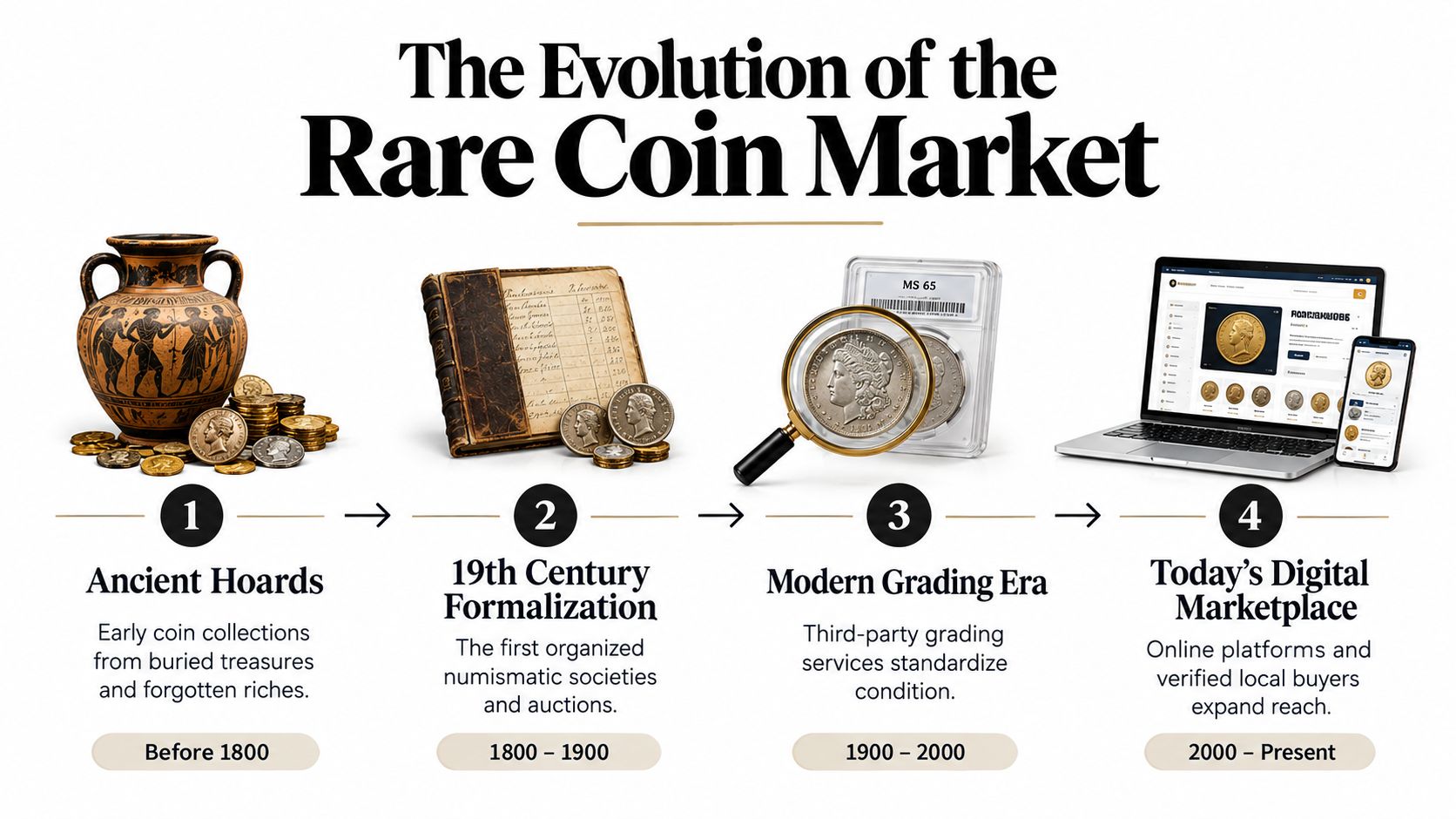
Public mint programs brought ordinary families into the hobby. The 1976 Bicentennial coinage and the 50-state quarter series launched in 1999 gave people a reason to save coins from circulation, while inherited collections continue to bring first-time sellers to local counters. For families moving heirlooms, a specialist who understands antiques and careful handling can also help with the broader collection, including resources such as find expert antique movers from TLC Moving & Storage.
Why buyer motivation matters
Today's rare coin buyers weigh several factors at once:
- Historical interest: A coin may matter because of the period, event, or institution connected to it.
- Design: Attractive, unusual, or technically significant designs can draw collectors.
- Scarcity: A low surviving population can support a premium, but scarcity claims need evidence.
- Condition: Small grade differences can affect value, especially for certified coins.
- Provenance: Ownership history and transaction records can strengthen confidence.
That's why authentication, provenance, grading, and accurate identification aren't optional extras. They're the foundation of a defensible sale. A buyer should be able to explain what the coin is, why it matters, and how the offer relates to comparable transactions.
Authenticate and Grade Your Coins Before You Sell
A roll of old silver dollars can contain common bullion, a collectible date, or an altered coin dressed up to look rare. Sort that out before discussing price. Place each coin on a clean surface, hold it by the edges, and record its country, denomination, date, mint mark, visible variety, and certification number. Photograph both faces and the edge. Do not clean or polish anything.
Start with a controlled inspection. Use consistent lighting and a magnifier to check scratches, unusual color, tool marks, weak lettering, edge seams, porosity, unnatural luster, and altered details. Compare the coin with authoritative references, then check weight, diameter, thickness, edge lettering, and magnet response where appropriate against mint specifications. These checks can expose a problem, but they do not replace professional authentication.
Preserve the paper trail too. Keep receipts, old envelopes, estate paperwork, photographs, and auction records. Record the coin's identifying details and ownership history before handing it to a buyer or grader. A coin certificate of authenticity can provide context, but a certificate alone does not establish rarity, condition, or a fair offer.
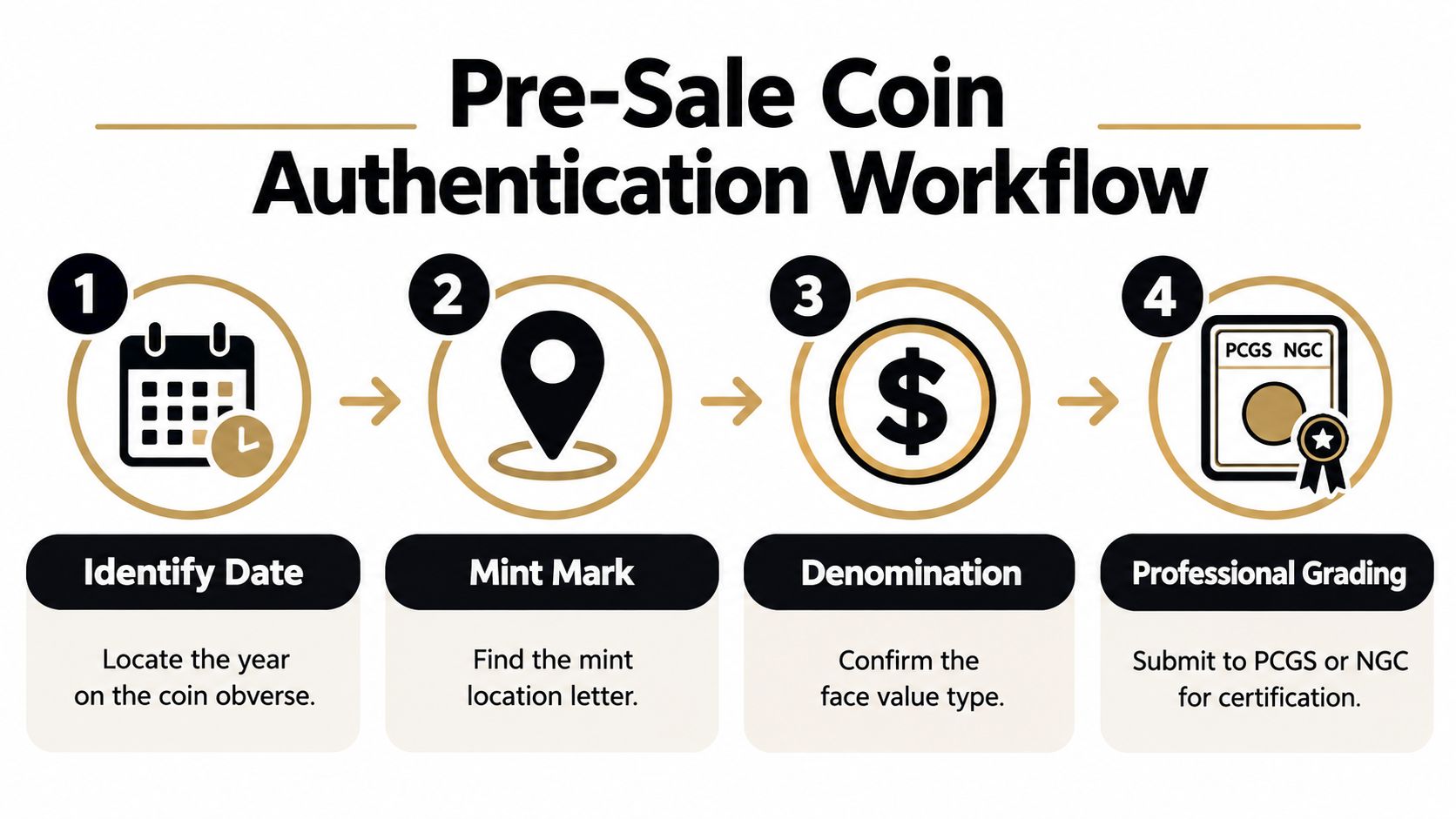
Professional graders use the 1 to 70 Sheldon scale. The PCGS process includes independent examination, reference-set consultation, and a consensus grade before the final result. Its guarantee applies while the coin remains in its original tamper-evident holder. Confirm the certification number, inspect the holder for damage or tampering, and leave the coin encapsulated. Review PCGS grading services before submitting anything.
Pay for independent certification when a one-point grade difference could materially change the value, when the coin is expensive relative to your experience, or when basic diagnostics leave authenticity uncertain. For lower-value pieces, a reputable Boise expert's in-person X-ray scan and acid test can establish metal content without shipping costs, insurance caps, or an online buyer's hidden spread.
A grade describes condition. It does not prove scarcity, eye appeal, liquidity, or a fair asking price. Keep your own record of the certification, grade, variety attribution, purchase price, and relevant completed sales. That file gives you a stronger basis for judging the buyer's offer and your actual net proceeds.
What Your Coin Is Really Worth in Boise
A coin has more than one value. Melt value reflects verified metal content. Numismatic value reflects authenticity, scarcity, variety, condition, provenance, and collector demand. Net proceeds are what remain after the costs of selling.
Start with the metal. Confirm weight and fineness, then determine the bullion component. A gold or silver coin with substantial intrinsic content may be easier to price than a scarce piece with few recent transactions. That doesn't make the scarce coin less valuable. It makes the valuation less liquid and more dependent on the buyer's network.
Next, compare several realized transactions for the same date, mint mark, variety, and certified grade. Don't use unsold listings as proof of value. An asking price is an opinion. A completed sale is evidence.
Coin Value Components at a Glance
| Component | What Drives It | How to Verify |
|---|---|---|
| Melt value | Verified weight and fineness | Weigh and test the coin, then use a current metal price |
| Collectible premium | Rarity, variety, condition, provenance, demand | Compare completed sales for the exact issue and grade |
| Dealer spread | The buyer's operating costs and expected resale margin | Request an itemized offer |
| Selling costs | Authentication, shipping, insurance, auction fees, taxes, and payment costs | Ask which deductions apply before agreeing |
| Time-to-sale | How quickly a buyer can place the item with the right collector | Compare immediate purchase with consignment or auction |
The Federal Trade Commission gives a useful warning: guidance cites a coin with about $1,750 in real value being marketed for $5,000, showing why a professional grade doesn't automatically produce a high cash offer. (FTC consumer guidance on collectible coins)
Write down your break-even resale price after commissions, shipping, insurance, authentication, and any bid-ask spread. A local buyer who weighs and tests the coin in front of you can explain the offer with documented diagnostics instead of relying on a promotional price estimate. For a broader framework, see this guide on how to value old coins. If your estate includes a business or a larger collection of assets, a professional service that can get a business valuation may help separate personal collectibles from business property.
Vetting Local Rare Coin Buyers in Boise
A seller walks into a Boise shop with old silver dollars and hears a confident price. Do not accept it until the buyer shows how the number was built. Ask whether the business authenticates coins in-house, provides an itemized appraisal, buys outright, or takes consignments. Ask whether it will review a written competitor offer, too.
The buyer should explain what happens when testing reveals a possible variety, error, or unusually high-grade example. A second examination may change the collectible value, so the process should allow time for review instead of pushing you to sign immediately.
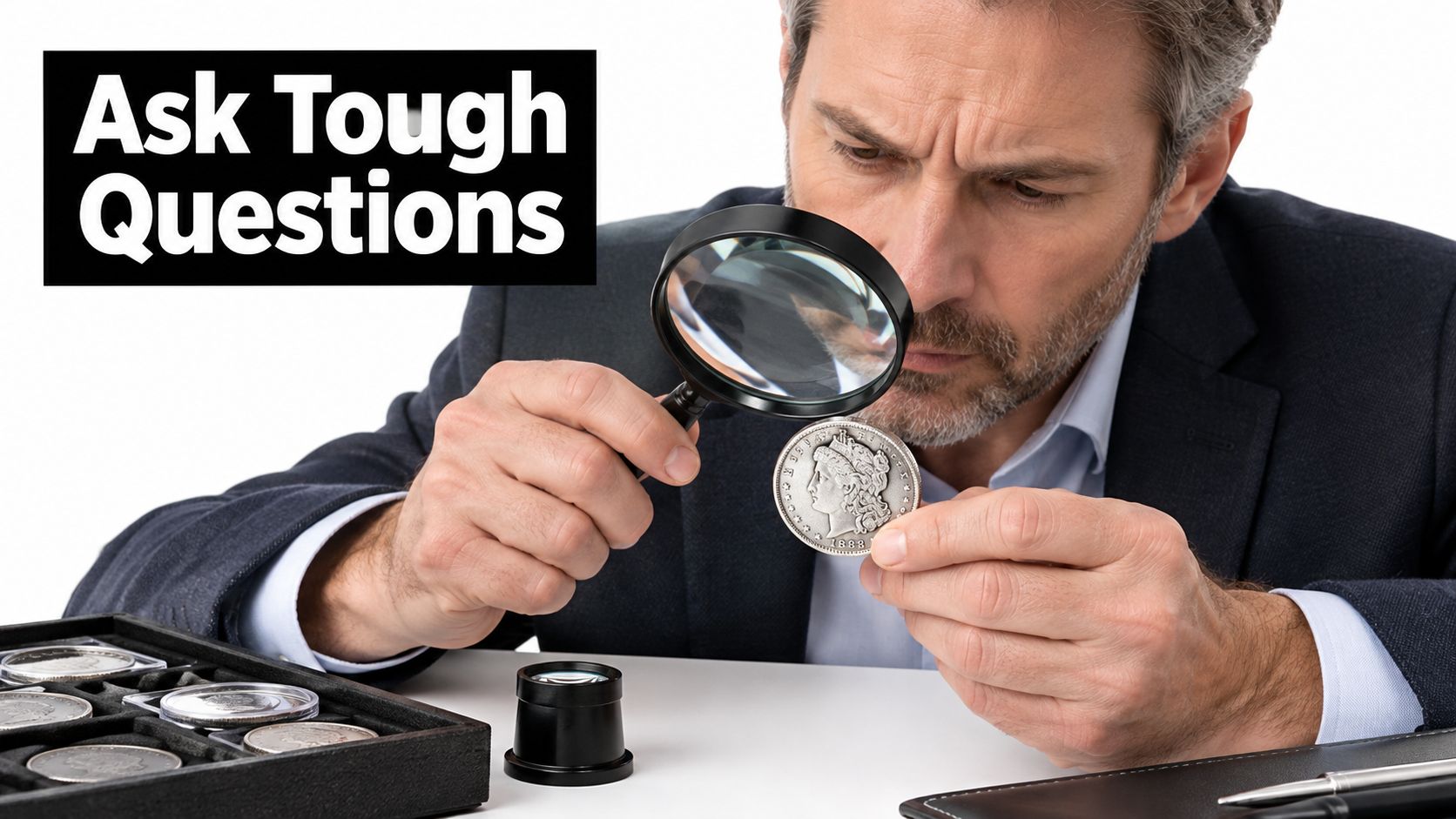
Carat 24's Boise process offers a practical comparison point. The business describes free X-ray scanning, free gold testing, an 8-step authentication process, hassle-free offers, price matching, and a stated commitment to high payouts in Boise for the items it handles. Confirm each service for your coins before treating it as part of the offer. A free in-person scan and acid test can clarify metal content and help separate melt value from collectible value before you ship anything.
Use these questions at the counter:
- Testing: Will the buyer test the metal in front of you?
- Documentation: Will the written offer identify the coin, valuation basis, deductions, and final price?
- Control: Can you leave with the coins and seek another opinion?
- Payment: Is this an outright purchase, or will payment wait for resale?
- Comparison: Why does the offer differ from retail, auction, or insurance value?
The FTC warning about investment scams identifies false expertise and urgency as warning signs in rare-coin and precious-metals schemes. Walk away from pressure, unsupported scarcity claims, “estate find” drama, or refusal to permit independent verification. Before choosing among numismatic coin dealers near me, compare two or three Boise buyers and keep the offer that gives you the clearest net proceeds, not merely the largest headline price.
Why Selling Locally Beats Shipping to an Online Buyer
A roll of old silver dollars can become a shipping problem before it becomes a sale. You must package the coins, declare a value, buy insurance, keep receipts, track delivery, and wait for the buyer's inspection. If the buyer disputes authenticity, condition, or contents, you may spend more time proving what you sent than comparing offers.
USPS mail insurance provides up to $5,000 in indemnity. A claim requires the original mailing receipt, proof of insurance, proof of value, and evidence of loss or damage. For missing or damaged contents, file within 60 days of mailing. Review the USPS insurance requirements before relying on coverage.
A Boise transaction keeps the coins in your hands until you accept the price. You can watch an X-ray scan or acid test, ask whether electronic testing fits the coin, and see how the buyer separates melt value from collectible value. Request the offer in writing, including deductions, before handing over anything.
The practical advantages are clear:
- Lower shipping exposure: Your coins remain with you during testing and negotiation.
- Fewer claim problems: A local sale avoids building an insurance file if a parcel disappears.
- Immediate answers: You can question an unusual deduction while the coin is on the counter.
- Quicker payment: An outright local purchase can avoid inspection and settlement delays.
- Easier comparison: Take the written offer to another Boise buyer.
A local sale does not guarantee the highest headline price. It can produce better net proceeds when the buyer explains the testing, valuation, and deductions clearly, while an online alternative adds shipping costs, insurance limits, delays, and uncertainty. Compare the amount you keep after every cost, not the number used in an online advertisement.
Negotiation Tactics and Paperwork Best Practices
Treat the appraisal like a transaction, not a favor. Ask the buyer to separate metal value, collectible premium, testing deductions, commissions, and any other charge. If the explanation changes when you ask for it in writing, that's a warning.
Get at least two written offers when the collection may contain scarce or certified coins. The offers don't need to match. They do need to identify the same items and use comparable assumptions.
Use a direct counter script
Ask these questions calmly:
- “What portion is melt value?” This reveals how much of the offer depends on metal content.
- “What comparable sales support the premium?” Insist on the same issue, variety, and grade.
- “What deductions reduce my proceeds?” Ask about authentication, shipping, auction fees, and commissions.
- “Is this an outright purchase or consignment?” The timing and risk are different.
- “Will you price-match a written offer?” Get the answer documented.
Never accept urgency as evidence of value. A buyer who says you must decide immediately is asking you to surrender your strongest protection, which is time to compare.
For consignment, record the term, commission, reserve, insurance responsibility, payment timing, and what happens if the coin doesn't sell. A consignment contract template for Shopify can help you identify clauses to discuss, but adapt any document to the actual transaction and obtain appropriate professional advice.
Keep the transaction file
Your signed receipt should list the date, coin description, certification or grade, weight where relevant, agreed price, payment method, and both parties' identifying information. Keep photographs, prior records, estate documents, and known cost basis. If you're handling inherited coins, note that the original purchase price may be unknown and preserve the inheritance paperwork.
Gold jewelry needs the same discipline. The FTC explains that 24-karat gold is pure gold, while 14-karat jewelry contains 14 parts gold and 10 parts other metals. It recommends checking that a karat mark is accompanied by the manufacturer's registered trademark. (FTC guidance on gold jewelry) For additional selling considerations, review how to sell collectible coins.
Choosing Your Next Step After the Appraisal
Once you have a documented appraisal, choose the sales route that fits the coin and your priorities. Don't confuse the highest theoretical price with the highest practical net proceeds.
Sell immediately when the coin has clear diagnostics, the offer is itemized, and you value certainty. For ordinary bullion-oriented pieces or coins with a well-understood market, a direct local purchase can be the cleanest outcome.
Use consignment when the coin is scarce, the buyer can identify a specialized audience, and you can wait for the right transaction. Get every term in writing, including commission, insurance, reserve, payment schedule, and the return process.
Choose an auction when competition could materially improve the result and you're comfortable with fees, timing, shipping, and an uncertain final price. Auction estimates are not guarantees, and a strong catalog description doesn't eliminate selling costs.
A useful negotiating rule is this: if the offer falls within 5 to 10 percent of the appraised value, taking the cash may be sensible when speed and certainty matter. If it's far below the documented value, ask whether consignment or a specialist auction would better expose the coin to qualified buyers. Apply that rule to net proceeds, not a retail price pulled from an online listing.
Short answers before you leave home
How long should a fair appraisal take? Simple, common coins may receive a quick evaluation. A mixed estate collection, suspected variety, or uncertified rare coin deserves enough time for identification, testing, and documentation. Don't accept a rushed number for a complicated group.
What if inherited coins have no provenance? Preserve the box, envelopes, receipts, photographs, and family notes anyway. Unknown history doesn't make a coin worthless, but it means the buyer must rely more heavily on diagnostics, certification, and comparable sales.
Should you clean the coins first? No. Cleaning can damage surfaces and reduce collector appeal. Leave the coin untouched and let the buyer or grader evaluate its original condition.
For sellers comparing precious-metal options, this guide on where to sell gold coins can help you decide whether a direct purchase, consignment, or another route fits your situation.
Carat 24 - Trusted Gold Experts offers Boise sellers free X-ray scanning and gold testing, an 8-step authentication process, hassle-free offers, and price matching for qualifying items. Bring your coins, jewelry, or inherited collection to Carat 24 - Trusted Gold Experts for an in-person evaluation and a written offer you can compare before you decide.
