
If you've stumbled upon a stash of old Mercury dimes, you might be wondering if they're just interesting relics or something more. Let's get straight to it: your Mercury dimes are absolutely worth more than ten cents.
Yes, Your Mercury Dimes Are Worth More Than Ten Cents
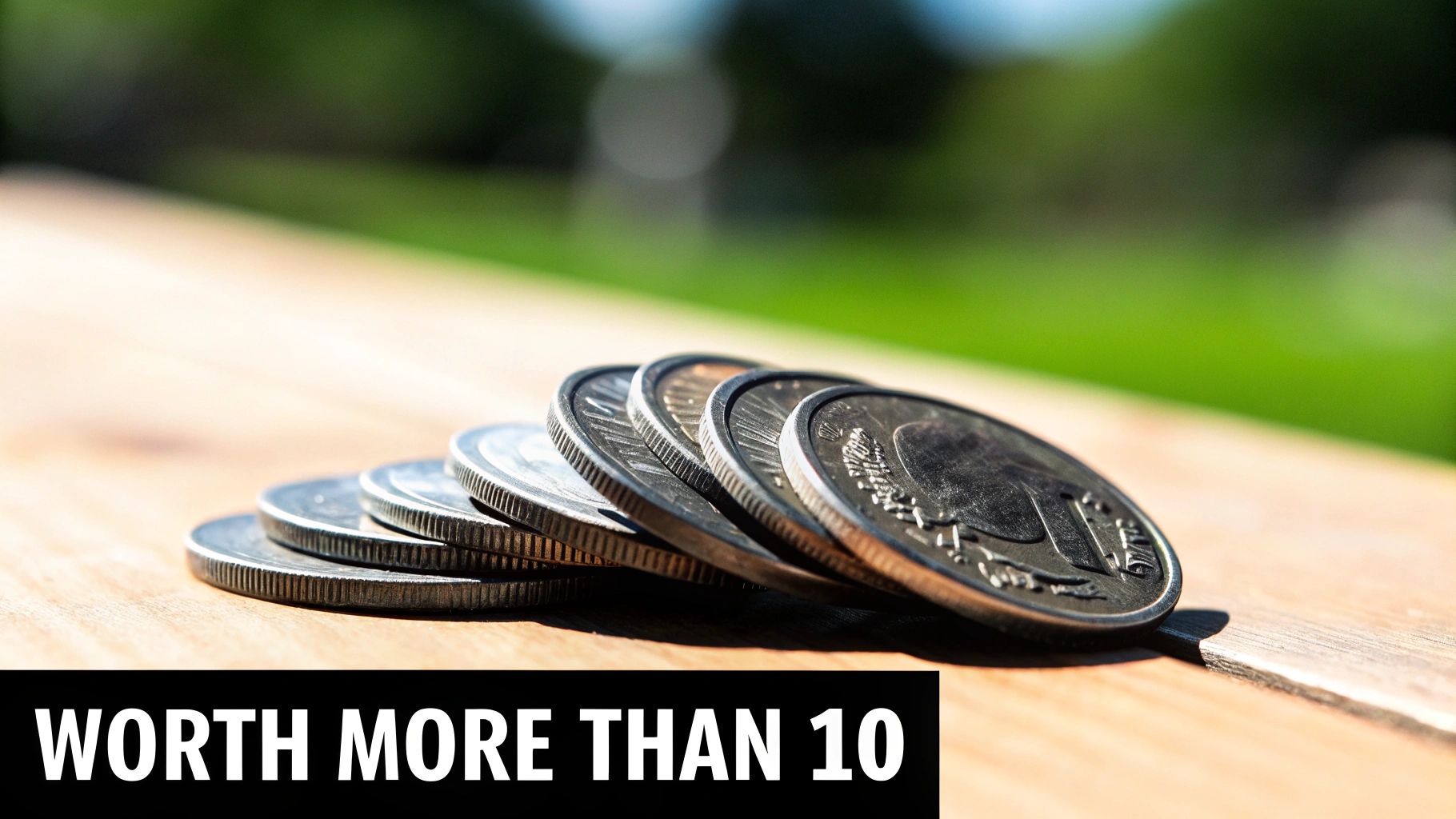
It's common to find these classic coins tucked away in old family jars or passed down through an inheritance. While it’s easy to dismiss them as just old pocket change, their real value is twofold.
First, and at a bare minimum, every single Mercury dime is made of 90% silver. That alone makes each one worth several dollars based on the daily silver market price. This is what we call its "melt value."
But that’s just the floor. The real excitement comes from their "numismatic value"—what a collector is willing to pay. Certain dates, mint marks, or coins in pristine condition can be worth hundreds or even thousands of dollars.
From Silver Content to Collector's Prize
This guide is designed to walk you through everything you need to know. We’ll start with the basics of silver value and then dive into the fun stuff: how to spot the rare key dates and high-grade coins that collectors are hunting for.
Our goal is simple: to help you figure out what you've really got and uncover the hidden potential in your collection. You'll learn how to tell the difference between a common coin worth its weight in silver and a rare variety that commands a serious premium.
To give you a clearer picture, here’s a quick breakdown of what you can generally expect.
Mercury Dime Value At a Glance
This table provides a snapshot of potential values, from common circulated coins to the rare, high-grade examples that get collectors excited.
| Dime Category | Typical Value Range |
|---|---|
| Common Date (Circulated) | $2 - $5 (Primarily silver value) |
| Better Date (Circulated) | $5 - $20+ |
| Key Date (Circulated) | $50 - $1,000+ (e.g., 1916-D, 1921, 1921-D) |
| Common Date (Uncirculated) | $10 - $50+ |
| Key Date (Uncirculated) | $1,000 - $10,000+ |
As you can see, the difference between a common dime and a key date is staggering. This is why knowing what to look for is so important.
Getting the Best Payout for Your Coins
When you're ready to sell, you have options. But many people find that selling to a trusted local expert is the easiest and most transparent route. It saves you the hassle and risk of shipping valuable items and gives you the chance to get an expert evaluation and immediate payment.
You can save the hassle and sell locally for more than online shipments often yield. Here in the Boise area, a good local buyer can make the entire process simple and secure. You get a professional appraisal right in front of you, ensuring you understand the value and get the best possible price.
A reputable local buyer should offer a secure, no-pressure experience. For example, here in Boise, you can find services that provide the highest payout with features like:
- Free Xray Scanning and Gold Testing: Using top-notch technology to verify your items' authenticity is a huge plus.
- Hassle-Free Offers: You should get a straightforward valuation without any pressure to sell.
- Gold and Jewelry Buying: A good dealer can assess all your precious metal items at once.
- Price Matching: This gives you confidence that you're getting the best price for your valuables.
By the time you finish this guide, you’ll have a solid handle on what makes your Mercury dimes valuable and feel ready to turn that old silver into a significant payout.
Understanding What Makes a Mercury Dime Valuable
Every Mercury dime has two layers of value, kind of like a classic muscle car. First, you have its basic value from the silver it's made of—think of this as the raw steel of the car. It has an intrinsic, baseline worth you can look up any day. This is what we call the melt value.
But the real excitement comes from its numismatic value. This is more like the car's make, model, year, and condition. It's the story behind the dime that can turn a simple piece of silver into a prized collectible.
The Foundation: Silver Melt Value
The starting point for any Mercury dime's worth is its silver content. Every single Mercury dime minted from 1916 to 1945 is made of 90% silver and 10% copper. This precious metal gives them a value far beyond their original ten-cent face value.
To be specific, each dime contains about 0.0723 troy ounces of pure silver. That's why even common, circulated dimes from the 1940s often sell for $3 to $6 at a dealer, well above their melt price. This silver acts as a safety net; your dime will always be worth at least its weight in silver.
If you're curious about how this weight adds up when you have a bunch of them, you can check out our guide on how many silver dimes make an ounce.
The Thrill: Numismatic Value
While silver provides a solid price floor, the numismatic value is what can send a dime’s price soaring. This collector value boils down to three key things: rarity, condition, and demand.
- Rarity (Mintage): This is all about how many coins were made in a particular year. A coin from a low-mintage year, like the famous 1916-D, is incredibly rare and sought-after. On the flip side, a 1945 dime had a huge mintage, making it common and less valuable to collectors.
- Condition (Grade): A dime that looks like it just rolled out of the mint will be worth worlds more than one that’s heavily worn down from being passed around. The fine details, like the sharpness of the lines in Liberty’s wings, are what graders look for.
- Collector Demand: Some coins are just more popular than others. The iconic Winged Liberty design makes the Mercury dime a perennial favorite, which keeps demand consistently high among hobbyists.
Getting a handle on these factors is the secret to seeing the true potential in your collection. It’s about looking past the silver and appreciating the history and story each coin has to tell.
This way of thinking isn't just for coins. If you want to dive deeper, understanding what makes an antique valuable can offer broader insights. Whether it's a coin, a piece of furniture, or fine jewelry, the same principles of rarity and condition almost always apply.
When you decide it's time to sell your collection, coming to a local expert here in Boise means you skip the hassle and risk of shipping. You get a firm, hassle-free offer on the spot, backed by services like free Xray Scanning and a price match guarantee, so you can be confident you’re getting the best deal and the highest payout.
How to Identify Key Dates and Rare Varieties
This is where the real treasure hunt begins. While every single Mercury dime has value from its silver, knowing the key dates, mint marks, and rare varieties is what separates a common coin from a truly valuable find. So, grab your dimes, get a good light, and maybe a magnifying glass—you’re ready to look for the details that matter most.
The first thing you’ll want to check is the date, which is right on the front (obverse) of the coin. Now, flip it over to the reverse side. Look closely to the left of the fasces (that bundle of rods). You might see a tiny letter. This is the mint mark.
A “D” means it was minted in Denver, an “S” means San Francisco, and if you see no mint mark at all, it came from the main mint in Philadelphia. That one little letter can change a coin's value dramatically.
The Most Valuable Mercury Dimes
Certain date and mint mark combinations are the heavy hitters in the Mercury dime world. We call these key dates, and their value comes from incredibly low mintage numbers—meaning very few were ever actually made. If you find one of these, you have something special.
The top key dates that every collector dreams of finding include:
- 1916-D: The undisputed champion. With only 264,000 ever produced, this is the rarest and most valuable of them all.
- 1921: Both the Philadelphia (no mint mark) and Denver (“D”) versions from this year are quite scarce and highly sought after.
- 1926-S: This is another low-mintage coin that commands a significant premium over more common dates.
This visual breakdown shows how a dime's value is built from both its silver content and its collector appeal.
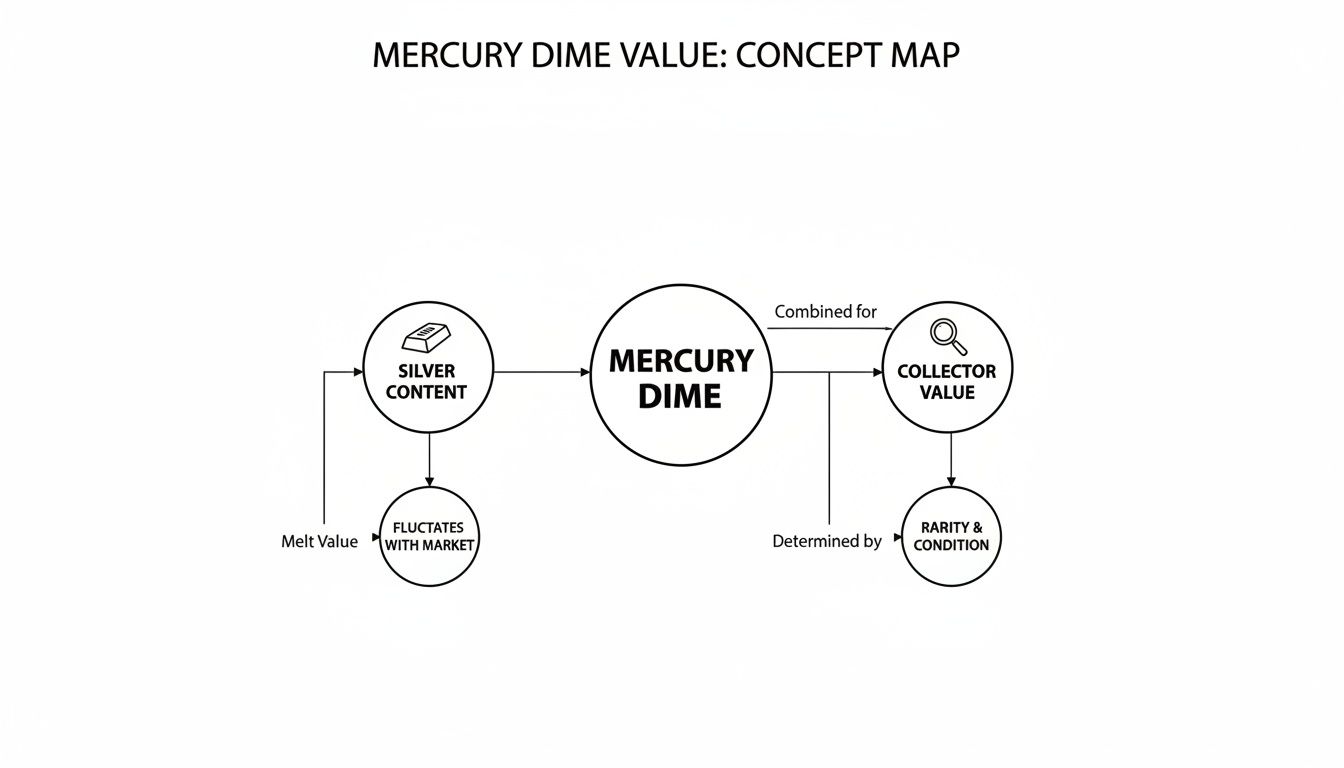
As you can see, collector demand—driven by rarity and condition—is what creates the potential for massive value, far beyond the base silver price.
Spotting Rare Errors and Varieties
Beyond the key dates, you should also keep an eye out for minting errors. The most famous one is the 1942/41 overdate. This happened when a 1941 die was mistakenly re-punched with a "2" to be used in 1942. If you look closely, you can see a faint "1" underneath the "2" in the date. This error, which came from both the Philadelphia and Denver mints, is a major find.
The difference in value is astonishing. Auction records show that a rare 1942/41 overdate has reached over $16,600, while an ultra-rare 1916-D can command $2,800-$4,500 even in circulated condition. This demonstrates the immense value rare varieties can hold.
Spotting these subtle differences can feel a bit overwhelming at first. To learn more, our comprehensive guide to understanding coin key dates offers more examples and tips to sharpen your eye.
Sorting through your coins and knowing what to look for is the first step. If you think you might have a key date or an error coin, the next step is a professional evaluation. Here in Boise, we offer free Xray Scanning and Gold Testing, providing a hassle-free offer so you know exactly what your collection is worth. It’s the best way to skip the hassle and sell locally for more than you'd get from online shipments. We specialize in Gold and Jewelry Buying and can assess your entire collection, ensuring you receive the highest payout with our price matching guarantee.
How Coin Condition Dramatically Affects Value
Let’s imagine you have two Mercury dimes, both struck in the exact same year. One might be worth just a few dollars, while the other could fetch hundreds. What causes such a massive difference? It all boils down to one simple factor: condition. In the world of coin collecting, we call this the coin’s “grade,” and it's the single most important element that separates a common silver dime from a true numismatic treasure.
A coin that has been jangling in pockets and cash registers for decades is called “circulated.” You can spot it easily—it will show obvious signs of wear, with flattened details and a duller, smoother feel. On the flip side, you have an “uncirculated” coin, which looks like it just rolled off the minting press yesterday, with all its original shine and crisp, sharp details intact.
For Mercury dimes, seasoned collectors know exactly where to look to judge the grade. The most important spots are the delicate feathers in Lady Liberty’s winged cap and the thin, vertical lines on the fasces (that bundle of rods on the back). The clearer and sharper those details are, the higher the grade—and the higher the value.
The Full Bands Designation: A Game Changer
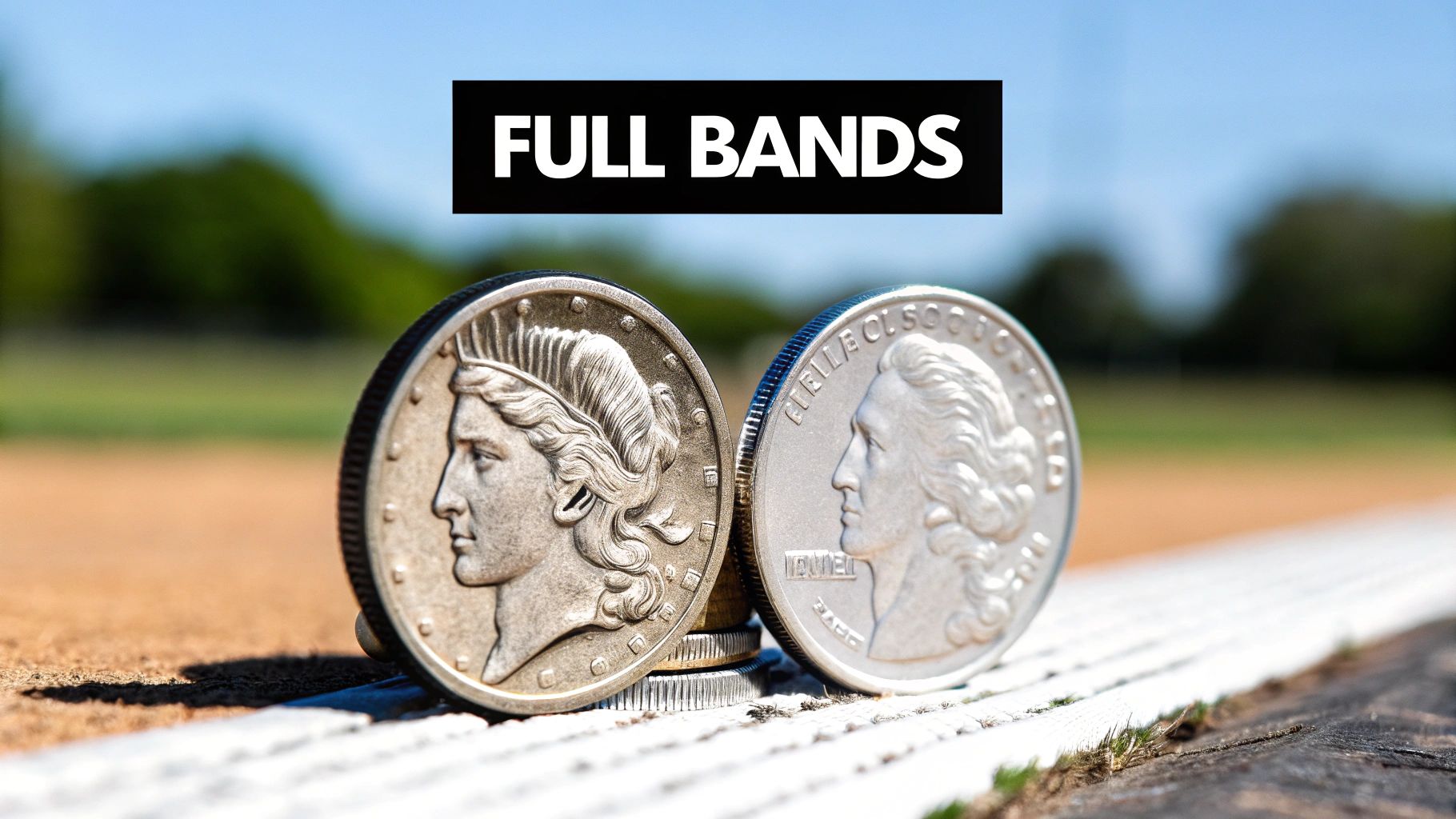
When it comes to Mercury dimes, the absolute king of details is the “Full Bands” (FB) designation. This term refers to the two central horizontal bands that wrap around the fasces on the reverse of the coin. To earn the coveted FB title, those bands must be fully separated with clean, distinct lines all the way across.
This tiny detail is a huge deal. It’s the mark of a coin that was not only struck perfectly but also preserved meticulously over the decades. The difference in value is staggering. A common 1945 dime in worn, circulated shape might be worth around $3. But that same 1945 coin in uncirculated condition with Full Bands could easily be valued at over $30. That’s a tenfold increase for a very common date!
The value for high-grade specimens with Full Bands can get truly astronomical. A 1945 dime, for instance, can leap from its base value of $2-$3 to an incredible $19,000-$65,000 in pristine FB condition. For a rare 1942/1 overdate, that FB designation can push its value toward $85,000, proving that condition is where the real money is.
Preserving Your Coin's Condition
If you think you’ve found a high-grade coin, protecting its condition is everything. Even something as simple as a fingerprint can cause permanent damage and tarnish over time, tanking its value.
To really protect your potential investment, you need to understand proper handling and storage. These proven tips for storing collectibles are a great starting point for keeping them pristine. For more coin-specific advice, check out our guide on how to properly store silver coins to avoid environmental damage.
If you have coins that look like they're in excellent shape, your best bet is to bring them to a local expert. Here in Boise, we offer free Xray Scanning and Gold Testing to give your items a professional assessment. You can skip the hassle and risk of shipping and get the highest payout for your gold and jewelry, all with a no-pressure offer and our price matching guarantee.
Getting the Highest Payout for Your Coins in Boise
So, you’ve sorted through your old dimes and maybe even found a few potential treasures. The next step is the most important one: turning those coins into cash. Knowing your Mercury dimes have value is one thing, but actually getting a fair price for them is what really counts.
It can be tempting to turn to online marketplaces or mail-in services. They seem convenient, right? The reality, though, is often a minefield of hidden risks. High seller fees can take a huge bite out of your final payout. Then there's the very real danger of your valuable coins getting lost or damaged in transit, not to mention the possibility of dealing with a dishonest buyer on the other end. You could wait weeks just to get a lowball offer with little power to do anything about it.
The Smarter Way: Selling Locally
There’s a much better way. Consider the security and straightforward nature of selling face-to-face with a trusted local expert. For anyone in the Boise area, this approach completely cuts out the guesswork and risk. You get an immediate, professional evaluation of your coins, and you can walk out the door with payment in hand the very same day.
Choosing a local buyer means you can save the hassle and sell locally for more than online shipments often yield. It’s about getting a fair, immediate payout without the stress of fees, shipping, and waiting.
A reputable local shop specializing in Gold and Jewelry Buying provides a secure, professional setting where your collection is handled with the respect it deserves. The entire process should feel simple, transparent, and completely free of pressure.
What to Look for in a Boise Buyer
When it's time to sell your Mercury dimes, you want total confidence that you're receiving the highest payout possible. A top-tier local buyer will offer key services that guarantee a positive and profitable experience.
Look for a dealer who provides:
- Free Xray Scanning and Gold Testing: This is a big one. Advanced technology can instantly and non-destructively verify your coins' silver content right in front of you, ensuring total transparency.
- Hassle-Free Offers: You should get a clear, straightforward offer with absolutely no obligation to sell. A true expert will take the time to explain the value of your items, whether they are common silver dimes or rare key dates.
- Price Matching: A price-match guarantee is your assurance that you're getting the most competitive payout in Boise for your valuables.
- Immediate Payment: Why wait? You avoid the long delays of mail-in services and receive your payment on the spot.
By working with a trusted professional, you not only get the most for your collection but you also learn more about what you have. For a deeper dive into navigating this process, our guide on how to sell silver coins offers even more valuable tips. Choosing the right local partner makes all the difference in turning your old dimes into a significant return.
Common Mistakes That Can Wreck Your Collection’s Value
Before you even think about selling, let's talk about what not to do. It’s just as important as knowing what your Mercury dimes are worth. Honestly, the single biggest mistake I see new collectors make is trying to clean their coins. It’s so tempting to make them shiny, but it's a surefire way to destroy their value.
Think of it like taking steel wool to a priceless antique table. Cleaning strips away the natural patina—the subtle toning that develops over decades—that serious collectors actually look for. It leaves behind a web of tiny, abrasive scratches, instantly wiping out the coin's historical integrity and sending its numismatic value straight into the ground. It might seem odd, but you can learn more about the very limited, expert-only methods in our guide on how to clean a silver dollar to understand why it’s almost always a bad idea.
Other Costly Errors to Avoid
Beyond the cleaning catastrophe, a few other missteps can seriously diminish your collection’s worth. Keep an eye out for these common pitfalls:
- Improper Storage: Tossing coins into old plastic flips, especially the soft, flexible kind, is a disaster waiting to happen. Many contain PVC, which breaks down over time and leaves a sticky, greenish residue that permanently damages the coin’s surface.
- Accepting the First Offer: Never, ever sell without getting a second opinion. A single offer isn’t a real measure of market value; it’s just one person’s price. You need context to know if you're getting a fair deal.
- Misidentifying Key Dates: This one hurts. Overlooking a tiny mint mark or a subtle variety like the famous 1942/41 overdate means you could accidentally give away a treasure for just a fraction of its true price.
The best way to sidestep these mistakes is to get a professional, no-pressure evaluation. An expert assessment ensures you understand what you truly have, protecting you from accidentally devaluing a hidden gem.
Here in Boise, we've built our business to help you avoid these exact problems. We specialize in Gold and Jewelry Buying and offer free Xray Scanning and Gold Testing for a completely transparent look at what your items are made of. You can save the hassle and sell locally for more than online shipments, all while getting the highest payout, backed by our price matching guarantee.
Here are some quick answers to the questions we hear most often from people who've stumbled upon a few Mercury dimes. If you're wondering, "Are these old dimes actually worth anything?"—the short answer is yes. These facts will give you a better idea of what you might be holding.
What's the Rarest Mercury Dime?
The undisputed king of the series is the 1916-D. Only 264,000 of these were ever minted, making it the ultimate key date for any serious collector.
Even a heavily worn, beat-up example can be worth hundreds of dollars. If you happen to find one in great shape, you could be looking at a value well into the tens of thousands. It's the one everyone hopes to find.
How Do I Know If My Dime Has "Full Bands"?
For this, you'll need a good magnifying glass. Flip the coin over and look closely at the fasces—that bundle of rods wrapped with bands on the reverse.
A coin only gets the coveted "Full Bands" (or FB) designation if the two central horizontal bands are completely separated. You should be able to see a distinct, unbroken line between them. This tiny detail is proof of a strong, crisp strike at the mint, and it can dramatically boost the coin's value.
A common, run-of-the-mill Mercury dime might only be worth its silver content. But that very same coin with Full Bands could be worth 10 times more. It's easily the most important factor for determining the value of an uncirculated Mercury dime.
Should I Sell My Dimes One by One or as a Group?
It really depends on what you have. If you’ve gone through your coins and picked out key dates, error coins, or beautiful uncirculated examples, you'll always get a better price by having them valued individually.
On the other hand, if you just have a big pile of common, circulated dimes, selling them as a group based on their total silver weight is usually more efficient.
The smartest first move is always to get a professional appraisal. An expert can quickly help you sort the treasures from the bulk silver. For folks here in Idaho, you can save the hassle and sell locally for more than online shipments. We offer the highest payout in Boise for your coins and specialize in Gold and Jewelry Buying. With free Xray Scanning and Gold Testing, you get transparent, hassle-free offers and a price matching guarantee.
Ready to find out what your collection is really worth? Come see us at Carat 24 - Trusted Gold Experts for a professional and profitable experience. https://carat24boise.com
