
A relative passes, and a shoebox lands on your kitchen table. Circulated coins, a couple of gold pieces, a ring or two, and a velvet box with a certificate folded inside. Is this metal, or is it worth more than metal? That split decides whether the payout stays close to the metal or runs several times higher.
Numismatic value is the collector premium above face value and metal content. Rarity, condition, demand, and historical significance set it. Metal weight is the grocery scale. The premium is whatever a buyer adds once scarcity and wear are clear, and it can dwarf the metal or nearly vanish. The finest-known 1822 Capped Bust Half Eagle, a coin with about $5 of face value, has sold at auction for millions of dollars.
Before any offer, price the metal from its weight at the current spot. Treat the rest as the collector premium, and match that remainder to evidence you can point at: date scarcity, surface wear, and real buyer demand. A single blended quote hides which half you are being paid for.
What Numismatic Value Means Beyond Face and Metal Worth
Set two gold coins of the same weight and fineness on a kitchen scale. The needle stops in the same place. A buyer paying only for metal will write nearly the same check for both. A buyer who also pays for the coin itself may not.
Measure that gap before you hear an offer. Bullion value, the collector premium, and the costs of the sale sit on three separate lines. Leave one out and the number you walk in with is already wrong.
Bullion value works like an ingredients list. It is the metal at the current spot price. On a common bullion coin, that line is almost the whole price.
The collector premium is a second price tag the scale cannot see. Buyers pay it for scarcity, history, condition, a design variety, and demand. It can run to many times the metal, or it can disappear on a common date nobody is chasing.
Transaction effects are the costs wrapped around the sale, such as certification fees and the dealer spread. They explain why the figure on a check is never quite the number in an auction headline.
Grading services have examined millions of coins, so part of the split is easier to see on paper. The ANA's collector guidance treats population reports as guides to what has been examined, not as standalone appraisals.
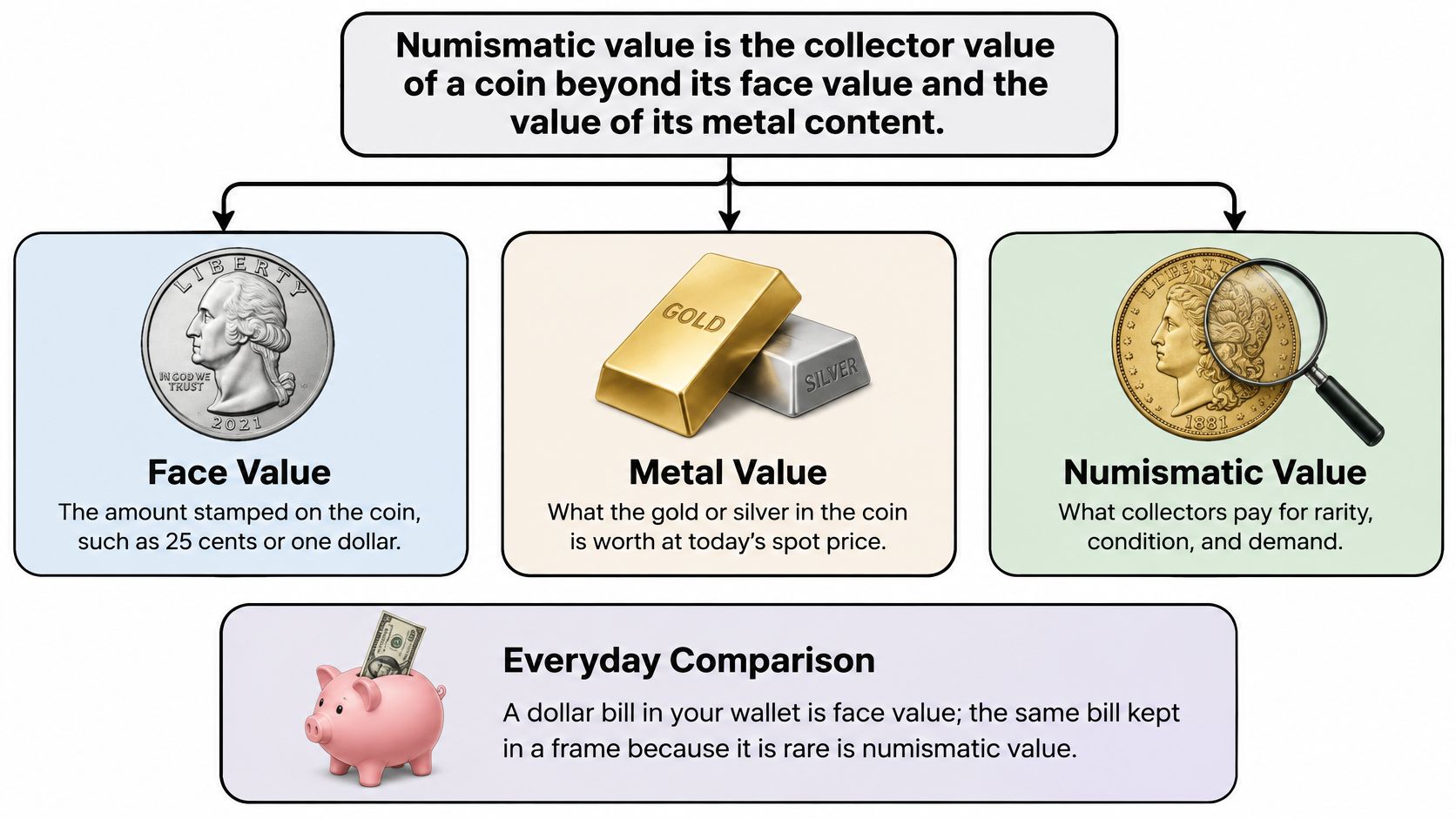
Same gold, shared floor. If one coin is a common date and the other is scarce in high grade, the second can sell for many times the first. Metal sets a floor in some markets. It never sets the premium.
A quick test works on any coin in front of you. Read the date, find the mintmark, and check whether that date and mint combination is a known key before you form an expectation. Pull the collector case away from the metal weight first. That habit prevents most of the disappointment that follows a hopeful guess.
The Four Drivers That Set a Coin's Premium
Four drivers move a coin away from its melt floor, and collectors weigh them in a fairly consistent order. Each one looks like this at the counter.
| Driver | What Collectors Check | Signal That Raises the Premium | Effect on Value |
|---|---|---|---|
| Rarity | Mintage and surviving examples by grade | Few known survivors in the desired grade | Raises value only when buyers compete |
| Condition | Wear, design detail, surface and luster | Sharp, original, uncirculated surfaces | Steps up sharply near grade thresholds |
| Market demand | Active collector interest and recent sales | Popular series with strong bidding | Can lift or cap the price of scarce coins |
| Historical significance | Event ties, first issues, errors and varieties | Documented link to a notable event or error | Adds a story premium beyond scarcity |
Rarity starts with mintage but doesn't end there. The number originally struck and the number surviving decades later are two different figures, and the survivors in the grade buyers want matter most. Our guide to coin key dates sorts the dates and mintmarks that carry extra demand in each series.
Rule of thumb: rarity is counted in the grade buyers are chasing, not across every survivor ever struck.
Condition covers wear, remaining design detail, surface quality and whether the coin is still uncirculated. Age on its own earns nothing. A worn 1890s silver dollar and a fresh one share a date and nothing else.
Market demand decides whether scarcity gets paid at all. A scarce coin with few active collectors can fall short of expectations, while a popular, visually strong issue draws competitive bidding on the same day. Historical significance adds a story premium on top: first-year issues, coins tied to a documented event, and recognized errors and varieties all pull attention beyond their survival numbers.
The four interact, and that's where most estimates break. A rare coin in a soft market can bring less than a common coin in a series collectors are chasing this year, so treat any single driver as partial evidence rather than a verdict.
Why One Grade Step Can Change a Coin's Price
Two coins can share a date, a mintmark, and almost the same shine, then bring very different money because one number on the holder is a single step higher. Absolute rarity counts survivors across every grade. Condition rarity counts only the pieces that still sit in one quality band, and that smaller count is where prices jump.
A coin that turns up often in About Uncirculated grades, about 50 to 58, can be hard to find once it reaches Mint State, 60 through 69. At the top of Mint State the known population thins fast. Both coins can hold the same weight of metal. The extra dollars are the collector premium, and that gap should be measured before you accept a local offer.
| Grade Band | Typical Appearance | How the Premium Behaves |
|---|---|---|
| Good (G-4) | Heavily worn, date and major features visible | Mostly common-date value unless the issue is scarce |
| Very Fine (VF-20) | Moderate wear with most details visible | Modest premium for scarce dates |
| About Uncirculated (AU-50 to AU-58) | Slight friction on the high points | Common issues can become hard to find |
| Mint State (MS-60 to MS-69) | No wear, luster and marks vary | Premium climbs steeply near MS-65 and above |
| Top Mint State (MS-70) | No wear, few marks under magnification | Very few known, so top-grade bidding drives the price |
The price jump is rarely proportional. It works like airline seats on the same flight: a middle seat and the last front-row seat are both "on the plane," yet the fare is not a small step apart. When a handful of collectors chase the few top specimens, an MS-65 can sell for many times an MS-64 of the same issue, even when an untrained eye struggles to see the difference. Marks, luster, and strike quality sit in that gap.
Certification clusters at the expensive end. Of the 30 highest-priced U.S. coins sold at auction in 2025, 28 carried PCGS certification and two were graded by NGC, according to CoinWeek's survey of the year's top results. Buyers are paying for a grade opinion they can check from another state, not for a heavier coin.
Before you compare an offer with the evidence, work in this order:
- Record the identifiers. Certification number, grading service, numerical grade, mintmark, and variety.
- Check the population. How many examples that service has recorded at that grade for that exact issue.
- Compare completed sales. Realized auction prices for the same issue and grade, not asking prices on a listing site.
Set the melt value aside in your notes and treat everything above it as the premium those sales support. A published price guide is only a screen. It cannot price eye appeal, originality, damage, cleaning, provenance, or timing, so a guide figure and a final sale often split. Our page on coin grading services covers what a slab does and does not certify.
Separating Metal Value From the Collector Premium
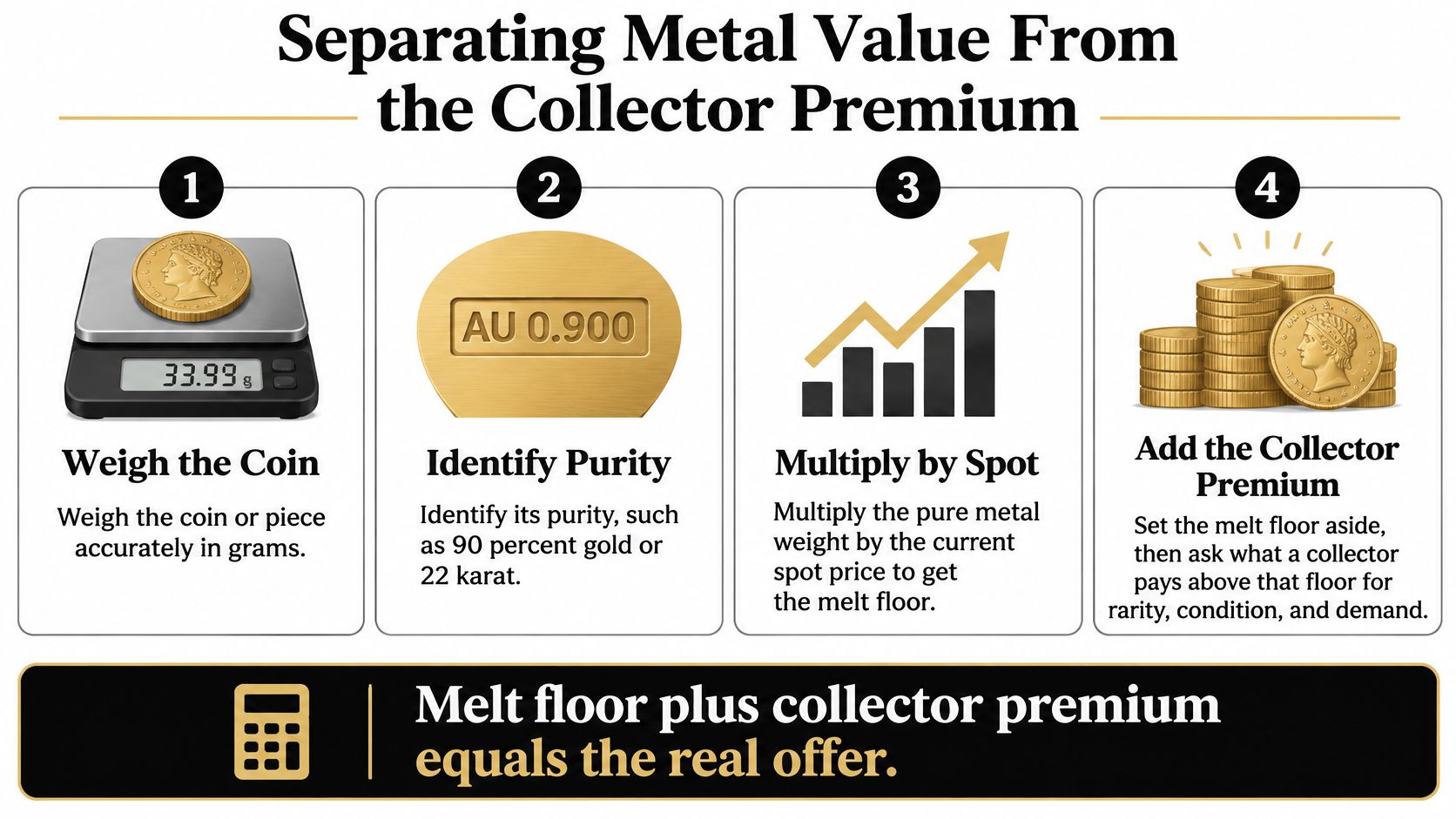
Separating the metal from the premium is a five-step exercise, and doing it before you shop an offer changes the whole conversation.
- Weigh the piece. Grams first, then convert to troy ounces. A scale that reads to 0.01 gram catches the small deviations that signal a fake or an altered piece.
- Identify purity. On a U.S. gold coin that means the stated fineness; on jewelry it means the karat mark. Purity is what converts weight into pure metal content.
- Multiply by spot. Pure metal weight times the current spot price gives the melt floor. Our live spot price for gold and silver page shows where that number sits today.
- Grade and attribute. Date, mintmark, variety, then condition, backed by clear photographs and a certification number if one exists. This is the step that decides whether a premium is even possible.
- Check realized sales. Same issue, same grade, completed transactions. Asking prices prove nothing about the price a buyer paid.
Originality sits between steps four and five and deserves its own warning. A cleaned, polished or damaged coin can hold every bit of its metal value and lose most of its premium, because collectors pay for original surfaces. The reverse happens too: a low-metal-content coin can be worth far more than its melt value when scarcity and demand dominate.
One piece of context matters if you own modern bullion products. Gold and silver rounds sold on our website are privately minted and are not legal tender, so their value rests on metal content and market demand rather than face value.
Melt floor plus collector premium equals the real offer. Anything that skips the second half is a metal quote.
Then the question that settles everything: what evidence proves this coin deserves a collector premium rather than only its melt value? If you can't point to attribution, condition, originality and a comparable sale, you have a metal offer, not a numismatic one. For estate pieces, list estate coins on DIYAuctions to watch what comparable lots realize before you settle on a number.
Real Sales That Show the Gap Between Metal and Premium
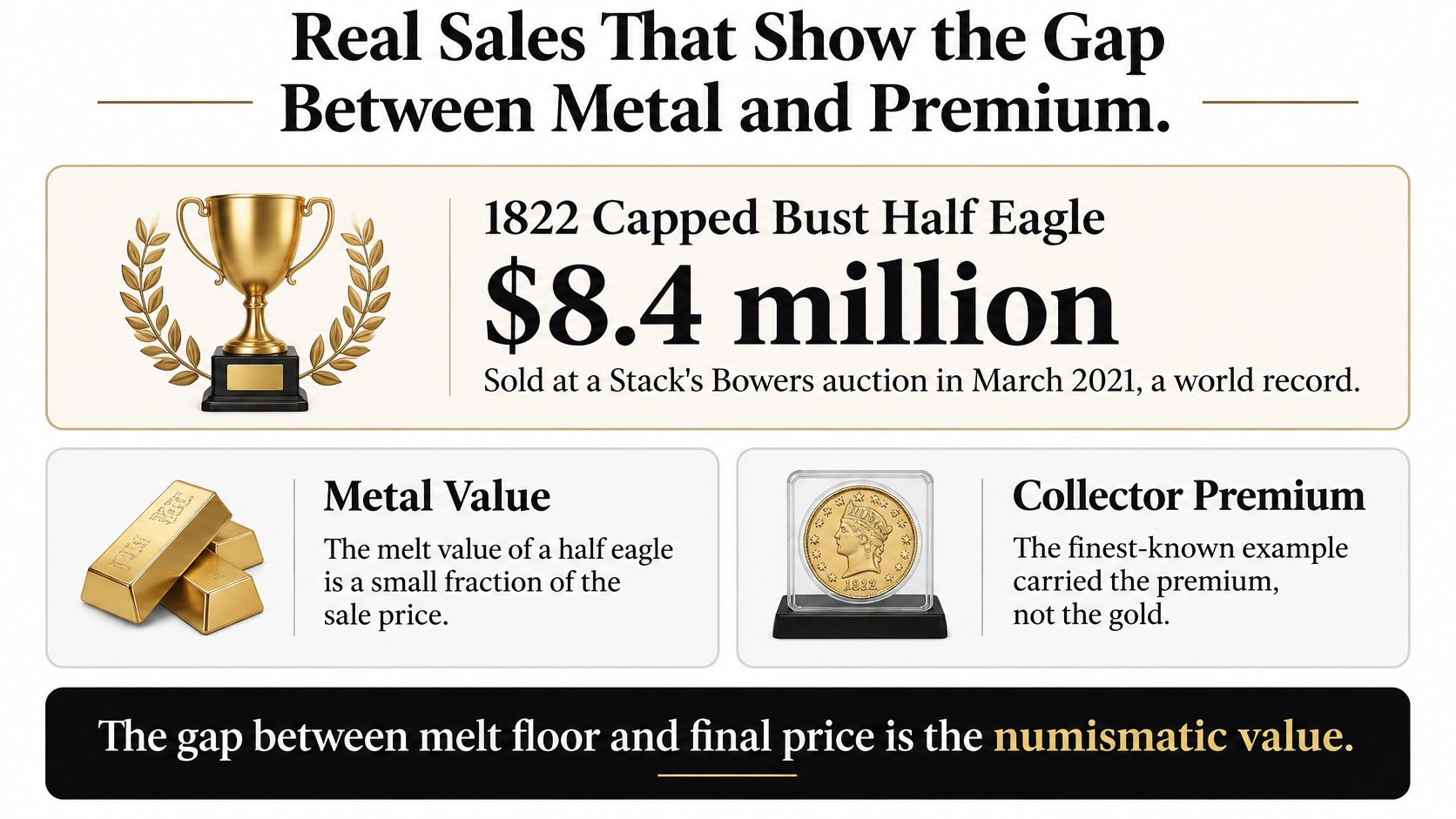
Suppose a local buyer prices a coin by gold weight alone. The 1822 Capped Bust Half Eagle sale shows what that method misses. In March 2021 the finest-known example sold for $8.4 million at a Stack's Bowers auction, a world record for the issue, as NGC's auction coverage records.
Face value on that coin was about $5. Nearly all of the hammer price sat above the metal, in how few examples survive, the condition of this one, its history, and how strongly collectors wanted the piece that reached the auction room.
A matching grade label does not freeze the price either. Two coins can leave the same grading service with the same number on the holder and still sell far apart. What sits inside that grade matters: how scarce that level is, how many similar coins are already certified, the timing of the sale, eye appeal, earlier ownership, and how many bidders compete that day.
A grade records an opinion about condition. The dollar figure still has to come from a finished sale.
Ordinary coins split the same way. Two 1964 dimes that look identical can land at very different prices once condition, variety and buyer interest enter the picture. Weigh the metal first, then set that number beside what a comparable coin brought. The gap between those two figures is the collector premium, and completed sales are the only place it shows up. Authenticated condition plus those results is the evidence. A hope about what the coin "should" bring is not.
Selling Gold and Jewelry Locally in Boise
You set a gold ring and an old coin on a Boise counter. The scale can price the metal. It cannot price the date, the wear, or the buyer who wants that exact piece. Split those two numbers before you accept anything.
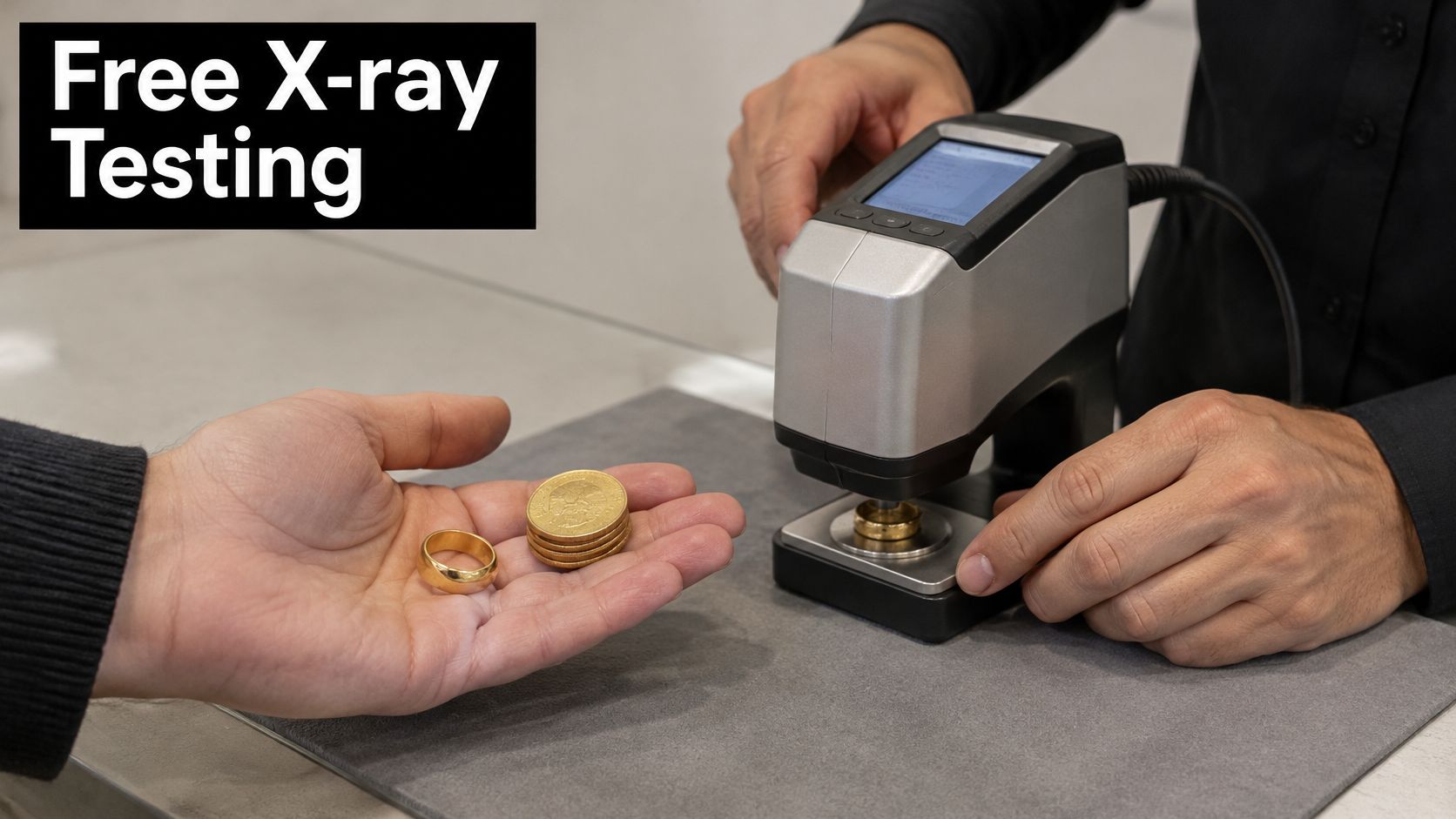
The common bench method is X-ray fluorescence. It reads the surface without cutting, melting, or scratching the piece, which matters if you might still wear the ring. Fischer's technical FAQ describes XRF analysis of precious metals as non-destructive, with measured gold content typically within less than 0.5% of the true value and often better depending on calibration and operating conditions. Treat that reading as the metal layer only. The collector layer is still unsettled.
Karat Marks Tell You the Metal, Not the Whole Story
A karat stamp starts the metal math. It does not finish the offer. The FTC's jewelry buying guide explains that a gold karat mark identifies how much pure gold a piece contains. Stones, workmanship, condition, brand, rarity, and collector demand sit on top of that figure.
Melt value works like the scrap price of a car: weight and purity, paid as metal. Numismatic or jewelry value works like the price of a cared-for classic: the same metal, plus who made it, how it survived, and who is shopping today. A melt offer and a collectible offer can sit far apart on one object. Ask which of the two you are hearing.
Separate the Metal Number From the Premium
Write the offer as two lines before you compare it with anything else.
- Metal: measured purity times weight, checked against the live spot price.
- Premium: everything above that metal line, tied to condition, stones, brand, rarity, or recent sales of similar pieces.
A comparison is useful only when both sides match: same purity, same weight, same condition, same stones or papers, and a real cash figure rather than a quote that changes after someone finally inspects the item. XRF supports the metal line, and it still misses things. Thermo Fisher's comparison with fire assay reports typical accuracy of about 0.1 to 0.2% for large, flat samples and under 0.5 percentage points for small, irregular ones, and warns that thick plating or adulteration may require a second test.
At Carat 24, prices for items sold to the shop are based on good, marketable condition. Significant wear or damage can mean a lower price, or no offer. That condition screen is part of the premium, not a hidden cut to the scale weight. If the buyer cannot point to the metal line and the premium line separately, you do not yet have a number you can judge.
The Case for Selling Locally
Shipping precious metal adds costs that never appear in a headline quote. You arrange carrier-approved insurance, use a carrier that accepts bullion, photograph the sealed weight, keep the receipt, and watch the claim clock. One shipping guide notes that FedEx coverage for precious metals and coins may be capped at $1,000, and that USPS Registered Mail claims open after 15 days and close after 60. Insurance, packing, and a possible claim come out of the online result. A local offer has none of those deductions, so the net can be higher even when the posted figure looks smaller.
Here is what that counter test looks like in practice.
Carat 24 buys and sells gold, silver, bullion, coins, and other precious metals, and also buys gently used jewelry. Bring the coin with the ring and ask for each item on its own. A coin with a collector following should not be folded into a jewelry melt figure. If you are still sorting a box at home, the guide on how to sell collectible coins walks through attribution before you walk in.
Before you accept: ask for the valuation basis and the payment terms on paper. A number without a stated basis cannot be compared with spot, with melt, or with a recent sale.
Bring papers, boxes, certificates, and receipts with the item. Get the metal reading, then set it beside your own melt baseline and recent comparable sales. Accept only after the premium is named and the payment terms are written down.
Do that once this week: measure the metal, name the premium, then decide.
Carat 24, at 3780 W. State St. in Boise, buys gold, silver, bullion, coins, and gently used jewelry, and its local team gives prices and insights on gold, silver, jewelry, and diamonds. Each item goes through an 8-step authentication process that examines materials and craftsmanship and checks serial numbers. Collectible pieces can be assessed apart from melt, so the evidence behind an offer is visible before you decide. Visit Carat 24 - Trusted Gold Experts for the bullion and coin collections, or bring the box in and separate the metal weight from the collector premium on each piece.
